
Workshop: Plants
Join us for Plants, the third event in our Manchester Workshop Series on Natural Archives and the History of Science in Asia.
This is an online event.
Wednesday, Apr 29, 2026 from 12noon to 2:30pm GMT+1
The workshop is convened by Dr Amelia Bonea (Lecturer in Global History of Science, Technology and Medicine, CHSTM, University of Manchester) and Dr Jeong-Ran Kim (Research Associate, Centre for the History of Science, Medicine, and Technology, University of Oxford), in collaboration with the John Rylands Research Institute and Library.
Speakers
Prof Jung Lee (Ewha Womans University)
A Regional Archive of Plants in Colonial Korea: From Korean and Japanese to Neither
As is well known, public schools in colonial Korea served as the Japanese equivalent of Christian churches in Western colonies. Japanese teachers, recruited with scholarships and other benefits, were expected to act as missionaries for the Japanese “civilizing mission” in colonial Korea. By the 1930s, some of these teacher-naturalists had established themselves within the colonial administration and Keijo Imperial University to launch ambitious research projects.
A notable example is a ten-year study involving 300 elementary schools in South Jeolla Province, led by the renowned teacher-turned-scholar Mori Tamezo (森爲三, 1884–1962) at Keijo Imperial University. Inspired by the movement for regionally rooted (kyōto, 鄕土) studies in Japan, they aimed to compile a new catalog of regional flora by building a comprehensive collection. They “requested” teachers from 300 provincial schools to submit specimens of 100 summer and 100 autumn plants from their respective vicinities. By 1938, the provincial education office had accumulated 63,000 dried specimens, a quantity that nearly rivaled the collections at Tokyo Imperial University.
This paper examines the formation of this regional plant archive in colonial Korea, focusing on how the initial visions that inspired these Japanese teacher-naturalists evolved over time. While the uniqueness of Korean nature and culture, the ecological relationship between plants and their habitats, and a sense of independence from the metropolitan center in Tokyo were central to their original plans, these elements faded by the time their report on the South Jeolla plants was published in 1940. Finally, this paper reflects on what the experiences of these teacher-naturalists reveal about the strengths and vulnerabilities of natural archives when fixed and centralized within imperial institutions.
Dr Jeong-Ran Kim (University of Oxford)
Phytological Warfare: Japan’s Plant Research during the Asia-Pacific War
This paper examines the involvement of Japanese medical scientists in plant research during the Asia-Pacific War (1931–1945). In the early 1930s, some Japanese medical experts adopted scientific approaches to traditional and herbal medicine in China, motivated partly by imperial ideology and partly by efforts to develop natural resources for the pharmaceutical industry within the Japanese Empire. Following the invasion of northern French Indochina in September 1940 and the subsequent occupation of other parts of Southeast Asia and the Pacific, plant research in these regions was increasingly institutionalized as a national project. The Japanese government sought to achieve medical self-sufficiency by promoting systematic investigations of medicinal plants and local medical knowledge in the occupied territories. Moreover, it was an urgent matter for the military to provide soldiers who were suffering from a range of tropical diseases, particularly malaria, with more effective medicine. At the same time, Japan advanced research related to biological and chemical warfare, including studies of toxic plants and other natural substances that could potentially be deployed against Allied forces and enemies’ food industries. To implement these national objectives, scientists at institutions such as the Institute of Southeast Asian Resources at Tokyo Imperial University and the Noborito Research Institute of the Imperial Japanese Army were actively engaged in plant research. After the war, some of their research findings, as well as several of the scientists involved, were appropriated or employed by the United States for Cold War military strategies.
Dr Emilia Terracciano (University of Manchester)
The Plant Autographs of Jagadish Chandra Bose
The early history of recording and communication technologies inaugurated research into the perception and cognition of vibrational continua connecting sound to infrasound and other inaudible frequencies. For Bengali scientist Jagadish Chandra Bose (1858-1937), technology granted access to anomalous zones of transmission, advancing interception of non-human communication. Best known for his pioneering contributions to the fields of microwave physics, optics, radio, and wireless telegraphy, Bose was also a botanist and plant physiologist whose experiments with plants led him to merge the boundaries of what had been historically separate disciplines – botany and physics. Bose was amongst the first to advance the view that plants were vocal beings, able to feel and learn from experience; for him, vegetal life was the shadow of human life. In this work-in-progress paper, I consider how Bose engineered the Crescograph instrument to record the ‘tremors of excitation’ and ‘the throbs and surges of life’ of plants in magnified graphic form. Termed ‘plant autographs’, these images were silent but reimagined by Bose as vocal transcripts of the plant itself. These visual recordings disrupted the idea of realistic depictions of plants, pushing the boundaries of botanical illustration beyond structures and surfaces to reveal the physiology of the plant not visible to the human eye. Bose’s research into the vegetal kingdom was celebrated at home and mocked abroad; ultimately, his plant autographs revealed anxieties surrounding plant sentience, colonial power, and the limits of the human.
Dr Madeline White (Northwestern University)
Re-classifying Collections: Using Asian Names and Images to Reconstruct Early British Botany
The Du Bois Herbarium at the University of Oxford has been a mystery for over a century. Created between 1680 and 1740 by Charles du Bois, cashier-general of the English East India Company and a member of the Royal Society, the collection contains approximately 14,000 specimens from across Europe, Asia, Africa, and North America. However, in 1884 it was dismantled from its original binding by curators hoping to integrate its specimens with the broader university collection. While original annotations and material components remained almost entirely untouched by this process, this act destroyed any record of the collection’s original, pre-Linnaean classification system. Consequently, the collection has sat uneasily between historical artefact and scientific research collection.
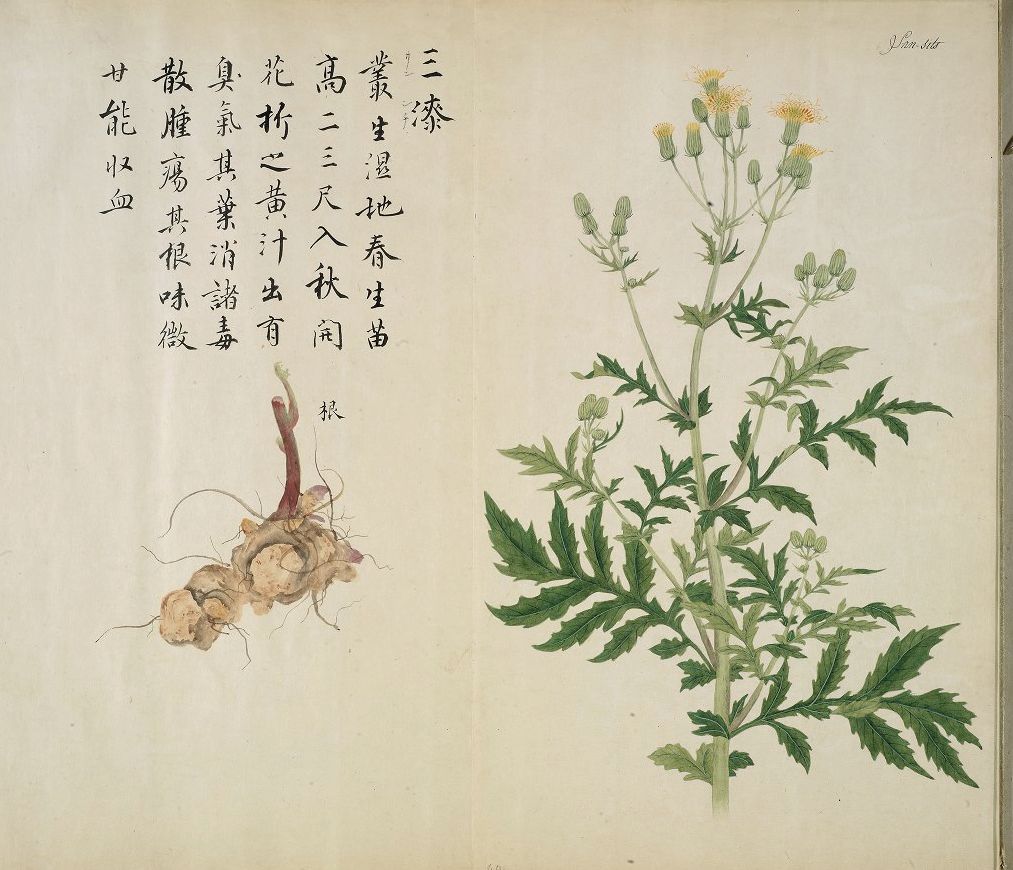
Review of the collection’s corresponding archival documents and images have presented a new means of reconstructing the collection, not according to European ordering schemes, but through expertise brought to the herbarium by Asian contributors. This talk explores the process of rediscovering the herbarium, and its value, through vernacular Tamil names and Chinese paintings. Analysis of herbarium specimens, labels, lists and indexes reveals that, in the time before Linnaeus, non-Western local names provided much-needed referential stability, facilitated scientific communication, and shaped European collections and taxonomic systems. Now, these features present a pathway to reconstruction of the Du Bois Herbarium through the combination of digital tools, historical research and scientific expertise.


Contact Us
+44 (0) 161 306 6000


0 Comments