
This piece, by HCRI’s Dr Costanza Torre, was originally posted on the Developing Humanitarian Medicine project’s blogsite.
 The chronic nature of crisis and the inadequacy of resources allocated to humanitarian operations can hardly be defined as new problems. Yet, it’s hard to think of a time when they have been as acute as today. As millions of people live in protracted displacement situations, humanitarianism is increasingly confronting the inevitable challenges involved in responding to complex needs amidst geopolitical instability and the dismantling of core funding institutions. For medical humanitarians, this means facing the specific and dire health-related implications of these issues, and asking: What happens when emergencies don’t end, and chronic illness becomes the norm in crisis settings? And crucially: how can humanitarianism manage chronic care, when emergency frameworks are short term by design and resources have undergone catastrophic cuts?
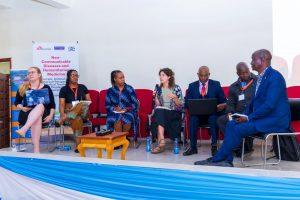
These questions anchored two days of vibrant discussion at the Non-Communicable Diseases & Humanitarian Medicine conference, hosted by Kisii University, Kenya in partnership with MSF UK and Eastern Africa, and the University of Manchester. The event brought together over 100 participants from across East Africa and beyond, ranging from humanitarian practitioners, clinicians, historians, and anthropologists.
The conference explored the growing presence of conditions such as diabetes, cancer, hypertension, mental illness, frailty, and chronic pain in humanitarian settings. “Non-communicable diseases are fast becoming the silent emergencies of our time”, a spokesperson for Kisii University aptly noted in the opening session; and throughout the following six thematically linked roundtables, engaged and interdisciplinary discussions among this varied audience made the event a space for fresh thinking on how humanitarian actors can respond to the growing burden of chronic illness in contexts of displacement, instability, and resource scarcity.
Discussions also tackled the fragility of funding structures, the risk of technological dependency, and the consequences of abrupt handovers when NGOs leave. In the words of Dr Evans Mecha (Kisii University), “Medical contact is systematically an episodic affair”, while Dr Jared Mbete (Kisii University) noted that ‘weak systems’ force patients to self-fund life-saving care; yet, the reality of non-communicable diseases is one that forces humanitarians to rethink the temporality of their engagement with communities. Panellists shared stark realities of the challenges involved in accessing and delivering care for NCDs; of the compounding pressures of political pressures, climate change, and structural inequality; and, as discussed by Dr Willice Abuya (Moi University) and Professor Isaac Nyamongo (Co-operative University of Kenya), the daily struggle to bridge biomedical systems with social and cultural expectations.
A session focused on practitioner perspectives zoned in on the cost of institutional shortcomings on health workers’ lives. Dr Eric Afema (IRC Uganda) highlighted how food insecurity and chronic poverty affect people’s ability to afford and sustain long term treatment in displacement; and how individual workers are deeply affected by a sense of helplessness, and frustration at the lack of multisectoral integration in emergency responses. Garang Buk Buk Piol (CRS South Sudan) passionately spoke about the high rates of burnout and suicide among health workers in South Sudan, who often go months without pay. These reflections shed light on an often overlooked issue: that of individual workers having to shoulder the overwhelming burden of structural failures as they strive to deliver care. How can humanitarian medicine build continuity into its work and meet patients where they are, without inadvertently abandoning health workers in doing so?
Other panels turned to the politics of access to treatment for non-communicable diseases in crisis settings. How can humanitarian actors disrupt pharmaceutical markets dominated by profit motives? How can pooled procurement initiatives, grassroot mobilisations, and innovative platforms such as MSF’s Magani.org, challenge inflated drug prices and increase equity? And how do we regulate online pharmacies and protect patients from substandard medications – which speaker Rosemary Mburu (Executive director of WACI Health) described as “an epidemic in themselves”? Jean-Baptiste Marion (MSF France) reminded us of the high demand for NCD medications, often forcing people to travel abroad to access treatment. Evans Obwocha (Kisii University) spoke of the importance of tireless advocacy to change national legislations and Essential Medical Lists to improve NCD accessibility; as Candice Sehoma (MSF Access) pointed out, hyper-reliance on pharmaceutical companies leaves those most affected by chronic conditions vulnerable to sudden and unsustainable price changes.
The final session brought the debate into the realm of technology: from AI-driven cancer diagnostics to telemedicine and algorithmic tools for palliative care. Yet speakers warned against blind faith in innovation; Kisii University’s Wilkister Were highlighted that telemedicine can hardly be a silver bullet in contexts where power outages and unstable internet are common, while Dr Chimwemwe Phiri (University of Manchester) warned of the ethical challenges surrounding patients’ rights and privacy when technological devices are involved in diagnostic processes. The lesson here is a crucial one: as Dr Janelle Winters’ (University of Manchester) discussed, technology must serve context, not the other way around. Appropriate and sustainable solutions – whether high- or low-tech – are what truly make care acceptable and effective in the lives of people living with chronicity under duress.
This conference didn’t just diagnose a problem. It offered a platform for genuine and collaborative dialogue, a space to reimagine what humanitarian medicine could look like when chronic care becomes central, not marginal, to emergency responses – as strongly advocated by Dr Pesh Muwanguzi (University of Manchester). Conversations took seriously the complexity and systemic nature of the issues medical humanitarianism faces today, with speakers pointing out the urgent need to de-centre Eurocentric models of humanitarian medicine to develop complex, sustainable, and contextually attuned systems that meaningfully respond to existing needs. Professor Bertrand Taithe (University of Manchester) advocated for the role of organisational memories and archives in avoiding the reproduction of colonial dynamics – which, as Mr George Nyakundi (Mwanyagetinge Heritage Council) noted, has been evident in the erasure of traditional medicine from humanitarian engagement with grassroot actors.
Overall, participants didn’t shy away from a recognition that there are no straightforward answers, and that as much as the questions are urgent, the processes to effectively tackle them will take time as we enter a difficult time for humanitarian action.
What stood out throughout the event was a shared recognition that as systems break down, solutions won’t emerge from the same structures whose intrinsic coloniality and systemic shortcomings have long contributed to forms of inequality shaping the social, economic, and health realities of millions today. Humanitarians can, and must deal with realities of chronicity – both of crises and of the conditions that unfold within them – in innovative, meaningful, and effective ways. As Endashaw Aderie (MSF Eastern Africa) reminded participants, “Humanitarian medicine is an art as much as it is a science.” In this spirit, more human and genuinely sustainable responses must be reimagined through interdisciplinary and decolonial dialogue – grounded in a deep, honest engagement with the lived realities of patients and practitioners, and with the systemic and power structures in which their lives are embedded.
For more on the Developing Humanitarian Medicine project, visit: https://www.dhm.manchester.ac.uk/