
This is the sixth in a series of posts where alumni tell us about their experiences studying at HCRI and their life and work following graduation.
This post was written by Hidayah Afzal, who graduated with an iBSc Global Health in 2025. She describes how intercalating broadened her medical outlook, deepened her interest in humanitarianism, and developed her critical and research skills through exploring the social and political determinants of health.
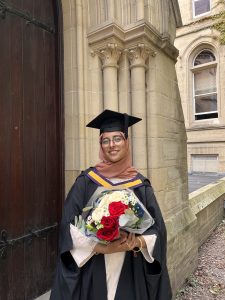 I chose to intercalate because I wanted to broaden my perspective beyond the clinical curriculum and understand the wider determinants of health. Medical education limits how much you can engage with political and social literature, whereas this degree gives you the freedom and time to do so. The understanding on how politics, culture and inequity shapes health outcomes, is essential to becoming a well-rounded doctor.
Not only do you develop written skills in research and essay writing, but the ability to discuss and collaborate with others helps grow your mindset. A highlight was completing the dissertation on women’s health in Palestine, which challenged me to navigate ethical issues whilst critiquing the literature within the field. Balancing an interdisciplinary workload with academic writing was demanding but rewarding.
This degree has shaped my medical outlook and furthered my interest in humanitarianism. My advice is to embrace the breadth of the programme as much as you can, speak to other classmates, take up office hours of the lecturers and engage deeply with both the academic and field-based perspectives. This degree opened many doors for me in the humanitarian field, which I didn’t expect- this only came from my ability to persist and take my work further than the degree.
To learn more about our courses, including the iBSc Global Health, visit: https://www.hcri.manchester.ac.uk/study/courses/