
Authors Bio: Ayla Emmink, (they/them) is a Medical Doctor working in Humanitarian Emergencies, with Doctors Without Borders, and other organisations. They are currently enrolled in the HCRI Postgraduate Master’s in Humanitarian Practice (LEAP), and are working as Deputy Rescue Coordinator for the iNGO SOS Mediterranee.
The opinions shared in this blog are personal and of the author alone, and do not represent the official point of view of HCRI, the University of Manchester, or the organisations mentioned.
It was a hot afternoon end of August 2025 in the Libyan Search and Rescue Region (Central Mediterranean Sea), we were sailing more than 50 nautical miles (93 km) north of the shores, in international waters. After two rescue operations and little sleep, the MV Ocean Viking was en-route to the last known position of another distress case, with on board 87 survivors and a crew of 35 sailors and humanitarians from 12 different nationalities.
The first rescue had been a response to an alert sent out by the NGO Alarm Phone, a system launched by activists in 2014 to help boats in trouble receive assistance. It was a rubber boat, overcrowded with people, that we found in the pitch dark. Luckily, they travelled with a satellite phone, and Alarm Phone received multiple updates of their location. The night we spent vigorously searching for another rubber boat, as the survivors told us they had departed in convoy. When the morning came without any sign of them, we had to accept that our efforts were in vain; this boat was most likely intercepted by the Libyan Coast Guard, and the people on board were brought back to the country they tried to escape, against the principle of non-refoulement. The Italian Maritime Rescue Coordination Centre (ITMRCC) assigned us Marina di Carrara, in Tuscany as Place of Safety (our destination harbour) and we set course north to start a four-day journey of over 1,130 km, away from our operational area, to disembark the rescued people.
As the survivors were awakening after their first safe sleep in a very long time, enjoying tea and cereal bars on the deck in the morning light, we learned of another distress case, this time a Mayday Relay announced via the emergency channel on the radio, broadcast by an unknown aircraft. After negotiating greenlight from the ITMRCC to delay arrival at our assigned port, we deviated course and headed full speed to the position. At this point, the boat in distress was adrift and taking water, so we decided to launch our fast rescue boats early and send them ahead to stabilise the case. Even before this rescue was completed, we heard another Mayday Relay over the radio, and so we continued to search immediately after all the people and the rescue boats were recovered.
I tried to rest for a bit as it promised to become a busy day with many people in need at sea. However, after a few moments in my bunk, I was disturbed by agitated communication over our handheld radios; there was a security threat as a patrol boat was approaching us from the bow at high speed. I was not even fully dressed as I heard a sharp noise: fast and repetitious clanging of metal against metal, and instantly I realised it was the sound of bullets against our hull, followed by screaming in the hallway. Once out of my cabin, I found some of my agitated colleagues arriving in the hallway, everyone reminding each other to stay low and stay away from the portholes, and I was wondering if someone had already been injured. Only when I arrived on the bridge and saw the air filled with shattered glass and wood splinters, the broken windows and my colleagues crouching on the floor, trying to call for help via radio, satellite phone and even the ship security alert system (SSAS), the intensity of the violence dawned on me.
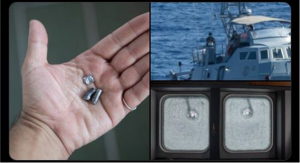 This is different from the threats we have faced before; unfriendly approaches of patrol vessels and speedboats are not uncommon, but usually they only threaten by circling us at high speed or using intimidating language and making unlawful claims over the radio. Why is it different this time, and what is their intention? Instantly, I imagined they would ultimately board our ship by force, perhaps shoot a few of us or maybe everyone. Although I was not panicking, I could not get rid of the image of some surviving crew having to deal with the destruction, and I started to think about what the most practical ways would be to perform damage control for the potential victims. Although we always trained for Mass Casualty Scenarios, such as recovering many people from the water after a shipwreck, no one was prepared for something like this to happen.
For twenty minutes, the Libyan coast guard vessel kept circling us like sharks and continued to shoot, even though we turned north and increased to full speed immediately when the shooting started. We gathered all the crew inside our safe space, and we had no choice but to leave the survivors, rescued just a few hours before, behind on the deck. Our care team had gathered all of them inside a converted container on the aft (the resting shelter for the survivors) as soon as the patrol vessel approached us. When the shooting started, our team members on deck were instructed to come inside once they found a moment safe to cross the deck. They had to leave the people that we came to save on the deck in the converted container, offering limited protection.
I could not, and still can not, comprehend how it came to this. How humanitarians, unarmed, who rescued vulnerable people who left everything behind, have become targets of a brutal attack performed by a coastguard, funded by the EU, acting against any rescue or maritime convention or law. An internationally recognised coastguard, with the duty to rescue and ensure safety and security at sea, knowingly and willingly endangered more than a hundred lives, without facing any direct consequences. While for us, there was no answer to our call for help, not from NATO, not from ITMRCC, nor from the Italian or Norwegian Navy (our ship’s flag state), no escort was sent, and until now, no response to our call for justice.
A month later, myself and other crew members are recovering at home, while our ship and rescue equipment are undergoing a lengthy process of repairs. The rescued people, finally able to report to their loved ones that they are alive and they are safe, by now must have been distributed over various reception centres and replacement homes for the unaccompanied minors, after their quarantine ended.
How can we heal when, at sea, the escalation of violence against survivors and NGOs continues? When yet another ship was targeted a month later, and still Libya and its EU sponsors refuse to take responsible action? How can the Civil Fleet continue to rescue on the Mediterranean sea, where over 2000 lives are lost yearly and even more go missing, while Italian and European authorities continue to criminalise and detain rescue ships and meanwhile collaborate with the Libyan Coastguard? This impunity at Europe’s deadliest border is intolerable; humanitarians and people in distress at sea should never be a target. If any respect for International Humanitarian Law remains, the EU, Italy and ultimately Libya should act to protect the civilians that are on the move at sea and the humanitarians that are trying to support them. They should make deals promoting pathways for a safe passage towards international protection, rather than further endangering the already deadly sea route, which, unfortunately for many, represents the only way out.
“No one puts their children in a boat unless the water is safer than the land” (Warshan Shire)
You can view the press release here:
https://www.sosmediterranee.org/sos-med-libyan-attack/ [sosmediterranee.org]