
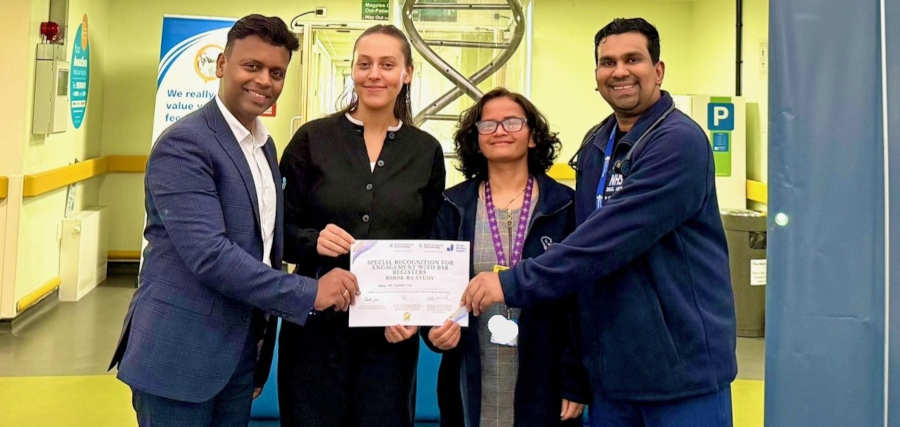
Meet our register champions from Medway NHS Foundation Trust (part 2)
In our last blog post, we asked Sabita, Senior Research Nurse, and Dr Srirangan, Consultant Rheumatologist, about recruiting to the study – both successes and challenges. We now find out what they find most rewarding about contributing to the BSRBR-RA, and their top tips for successful participation in the study.
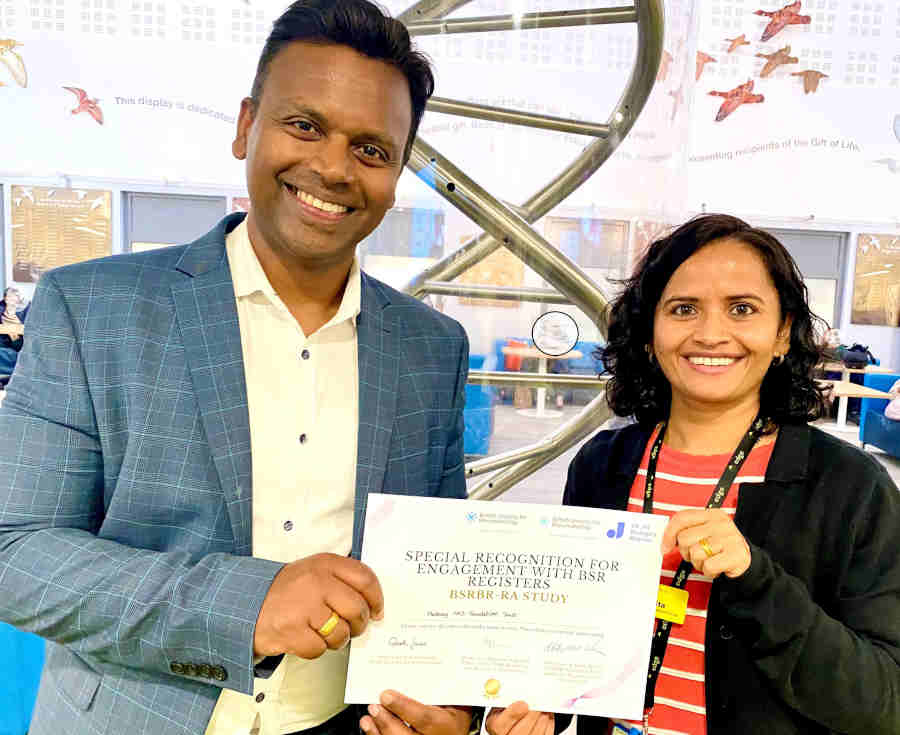
What do you find the most rewarding part of contributing to the register?
Sabita: Being a part of a prestigious long-running study makes me feel proud. The most rewarding part for me is when a participant signs up to the study without any hesitation, saying they want to help by taking part in this research for future generations and future treatments. Being recognised as having recruited well and completing follow-ups means we are contributing towards advances in treatments in rheumatology care.
Dr Srirangan: It is immensely rewarding to know that our contributions help strengthen understanding of biological therapies, particularly their real-world effectiveness and long-term safety in rheumatoid arthritis. Our patients share this sense of contribution. Many value being part of something that extends beyond their own care. We are proud to be part of the wider BSRBR-RA community – a collaborative network of clinicians, researchers and patients working together to advance rheumatology care.
Sabita’s top tips
- Have a dedicated time for follow ups and data queries.
- Encourage clinical staff & doctors to join API scheme so that we have additional help to run the study.
- As BSRBR-RA gives us a timeframe of 6 months for recruitment, allow patients to have plenty of time to read study information and utilise the postal service.
- A good time to catch patients could be during their follow up clinic visit following initiation of biologics.
- Always follow up by telephone after providing study information whether the initial contact was by phone or in person.
Dr Srirangan’s top tips
- Start the conversation early. Introducing research discussions at the outset of treatment escalation normalises participation and allows patient’s time to reflect.
- Communicate the value clearly. Patients are more likely to engage when they understand how participation benefits both themselves and others with similar conditions.
- Make participation simple. Provide clear written information and follow-up promptly to address questions and confirm understanding.
- Be persistent-but respectful. Recognise patient’s competing priorities and approach follow-up with sensitivity.
- Create a research positive culture. Encourage trainees to become involved and sign post them to opportunities such as NIHR associate PI scheme supported by the BSRBR-RA. Building a supportive environment where research is embedded into routine clinical practice allows participation to flourish, even in resource limited settings.
Medway have had two trainees who have successfully completed the NIHR Associate PI scheme.
Useful links
Contact Us
+44 (0) 161 306 6000


0 Comments