
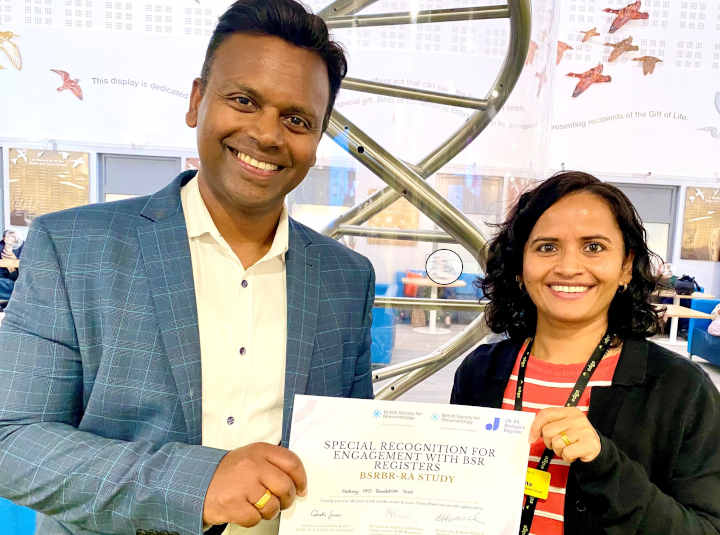
Meet our register champions from Medway NHS Foundation Trust (part 1)
We are proud to present our latest BSRBR-RA Register Champions – Medway NHS Foundation Trust. Medway have been involved in recruitment since the very early days of the register, have become particularly focused on recruitment over the last two years. In part 1, we ask them about how patients are encouraged to sign up and about any challenges they face with recruitment.
Meet the team
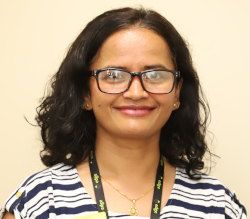 Sabita Pokharel, Senior Research Nurse
I am a senior research nurse looking after musculoskeletal, trauma and thyroid cancer studies at Medway Hospital. I have been involved with BSRBR recruitment actively from 2022.

Dr Srinivasan Srirangan, Consultant Rheumatologist
I am a consulting rheumatologist with a strong commitment to clinical research and improving outcomes for patients living with rheumatoid arthritis. I firmly believe that high-quality registry data are central to advancing our understanding of disease progression, treatment effectiveness and long-term safety.
How do you encourage patients to sign up?
Sabita: Patients are made aware through posters in the clinical area, waiting rooms, and the trust R&I website. Communication is the key in every step. We encourage patients by providing a brief overview of the study by telephone and explaining that the study does not require extra hospital visits etc. and even the consent can be done via post. The availability of outreach consent has motivated many patients to participate as they can complete the consent and questionnaires at their own pace and convenience.
Dr Srirangan: We introduced research discussions at a natural point in the clinical journey-typically when treatment escalation to biologic therapy is being considered. At this stage patients are often highly engaged and understanding the condition and treatment options. We explained how participation contributes not only to their own care through structured follow-up but also to advance the knowledge that benefits others living with rheumatoid arthritis. When the purpose and value are clearly communicated, most patients are very willing to participate. We proactively screened for suitable candidates during our fortnightly virtual biologic clinics. Once identified, patients are contacted promptly to discuss recruitment and provide further information.
Do you have any challenges with recruitment?
Sabita: We had difficulties in recruiting patients in person due to staff resources and time constraints. Patients express hesitancy if they are asked to come for separate research visits for various reasons including their time, issues getting to the hospital etc. Hence, the outreach consent has been popular and highly used at our site. Even for outreach consent, it’s not always easy to reach patients via phone which leads us trying to contact them several times. In addition, we can still face challenges with the postal service.
Dr Srirangan: Time and resource constraints remain ongoing challenges. While most patients are receptive during in-clinic discussions, we experienced attrition when consent forms are sent by Post, despite follow-up calls and reminders. We recognise that our patients have busy lives and competing priorities that may delay or prevent participation. Additionally, some older patients may find digital communication or online processes challenging which can create further barriers. Acknowledging and adapting to these realities is an important part of maintaining engagement.
Look out for part 2, coming soon!
Contact Us
+44 (0) 161 306 6000


0 Comments