
This post was written by Dr Jessica Hawkins (HCRI) and Dr Helen Underhill (GDI) about a recent session as part of the HCRI module ‘Conceptualising the Camp’, which explores the historical sociology of refugee camps.
Camps have been described as “exceptional spaces… put in place to deal with populations that disturb the natural order of things” (Turner 2016: 139). In this sense, the camp operates simultaneously as a symptom of political and social breakdown and as the proposed remedy for it. Despite their exceptional framing, camps are also everyday environments in which people live, work, attend school, and access healthcare. Yet these ordinary functions coexist with persistent concerns around risk and safety – most notably fire risk – which remains a central but often overlooked dimension of camp life.
This was a key theme in Dr Helen Underhill’s lecture on ‘Conceptualising the Camp’, delivered as part of this year’s postgraduate module structured around three components: the concepts and origins of the camp, the operationalisation of the camp, and the politics of the camp. Fire in the camp formed the second session within the “operationalising” section, drawing on Helen’s professional experience with a fire‑focused not-for-profit.
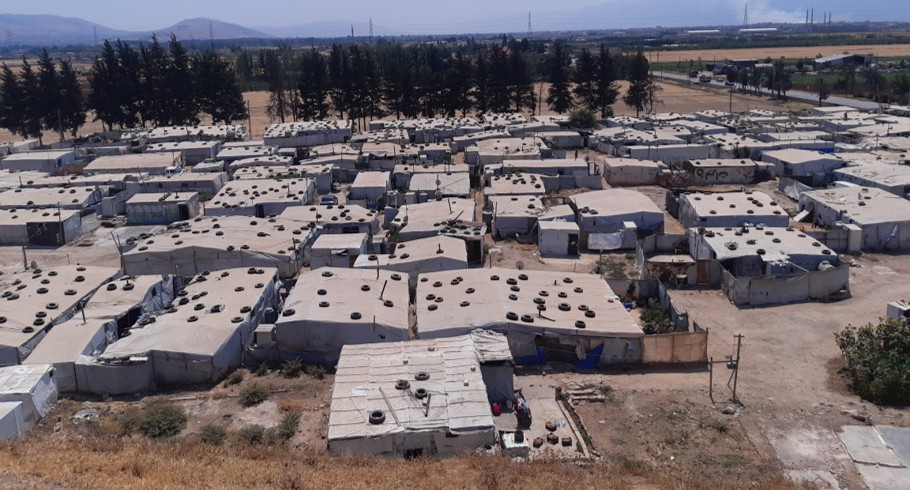
Figure 1
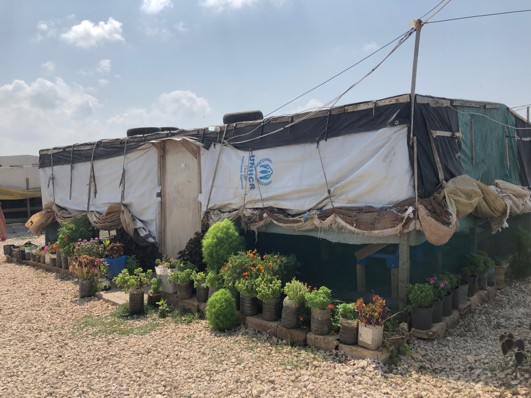
Figure 2
The session began with an examination of photographs (as featured in figures 1 & 2) depicting a range of camp environments, from informal settlements to formalised humanitarian camps. Students were asked to assess the spatial layout of each image – particularly the proximity of shelters and the likelihood of fire spreading.
The images revealed considerable variation: some shelters were constructed from plastic sheeting, others from timber, and others from corrugated metal, often reflecting whatever materials were available at the time of construction. Many camps were characterised by dense clusters of dwellings, improvised extensions, lean‑tos, and a proliferation of exposed electrical wiring. These material conditions collectively produce environments highly vulnerable to fire.
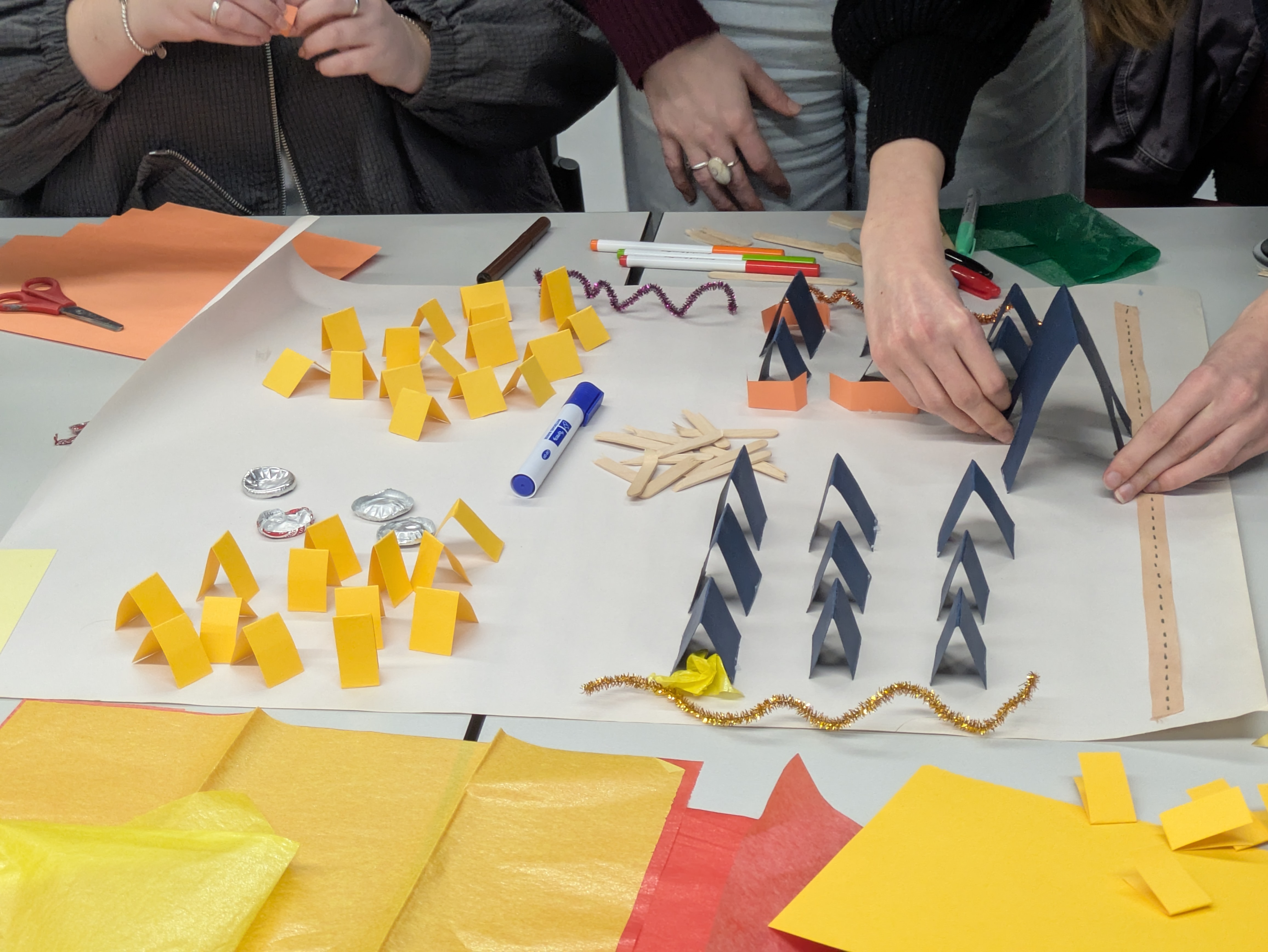
Figure 3
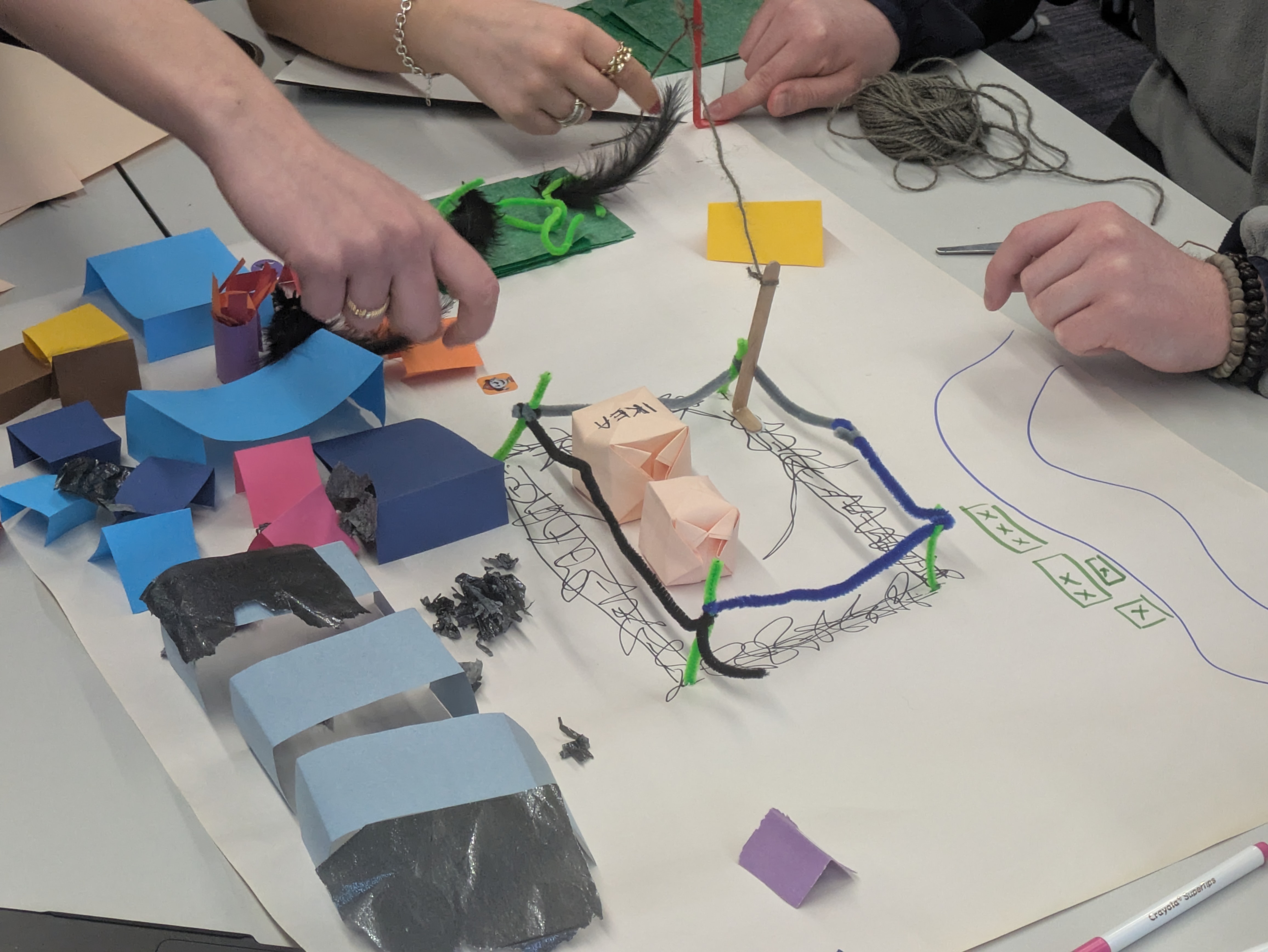
Figure 4
Students then engaged in a creative visual‑mapping activity. Working in small groups, they identified the key characteristics of the camp they intended to design and produced a creative visual representation using a variety of materials as pictured (figures 3 and 4). This required thinking critically about how people inhabit camp spaces, including how risk and safety are experienced differently based on varying social relations, norms and vulnerabilities, and the differences between those living inside formal camps, those in informal settlements, and those outside camp structures altogether.
The exercise encouraged students to consider how camp environments are experienced socially and spatially, and to identify the physical and social dimensions that shape fire risk.
Building on this, the class applied their emerging knowledge of fire risk to their visual maps. They identified potential fire hazards and considered who might be most exposed to different risks, at what times and why. This included examining evacuation routes, cooking and heating practices, electrical access points, doorway and window openings, storage arrangements, and winterisation measures as pictured below (figures 5 and 6). Although fire is the fifth most significant cause of death and injury globally, it remains largely neglected within humanitarian and development studies.
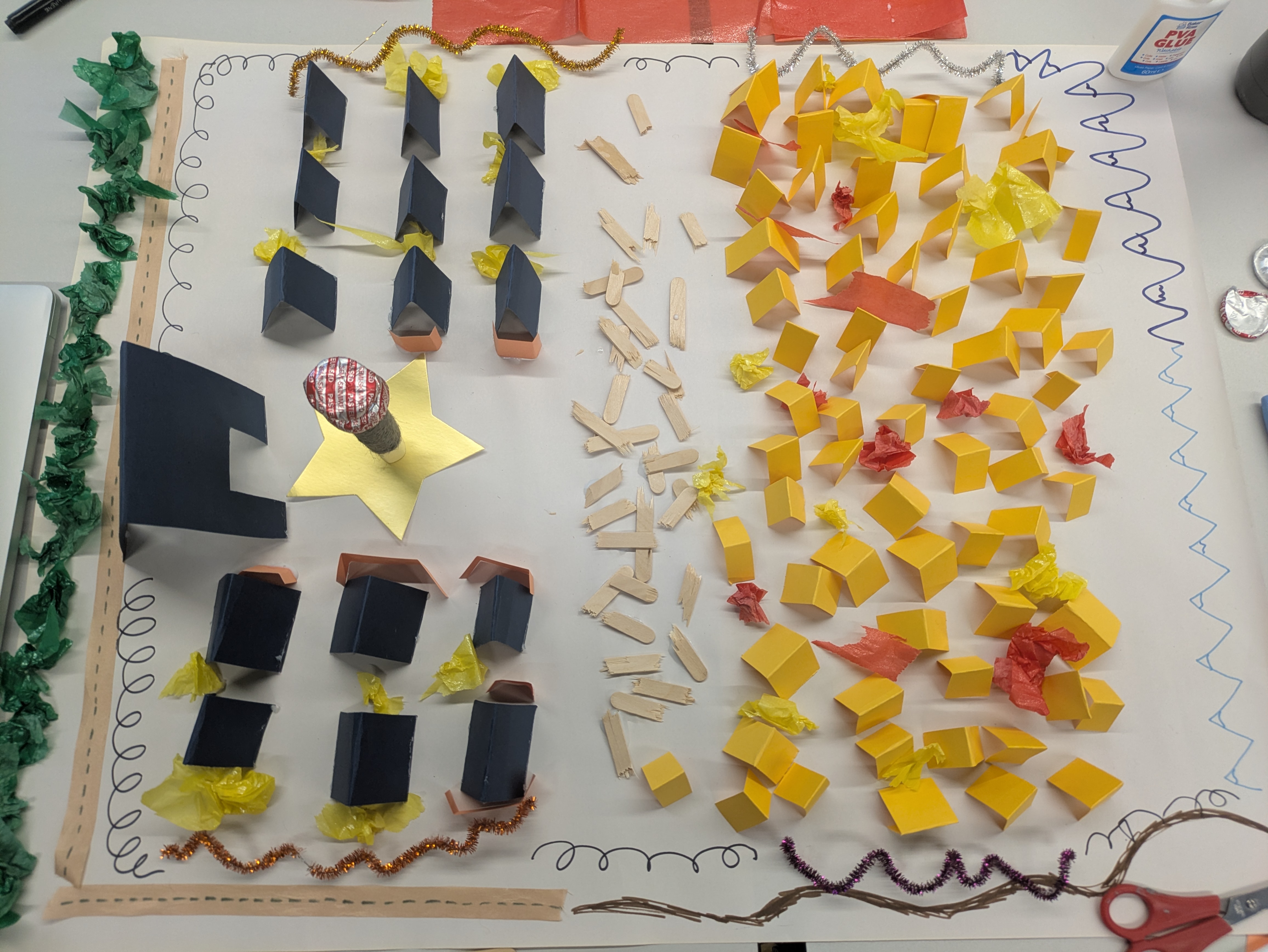
Figure 5
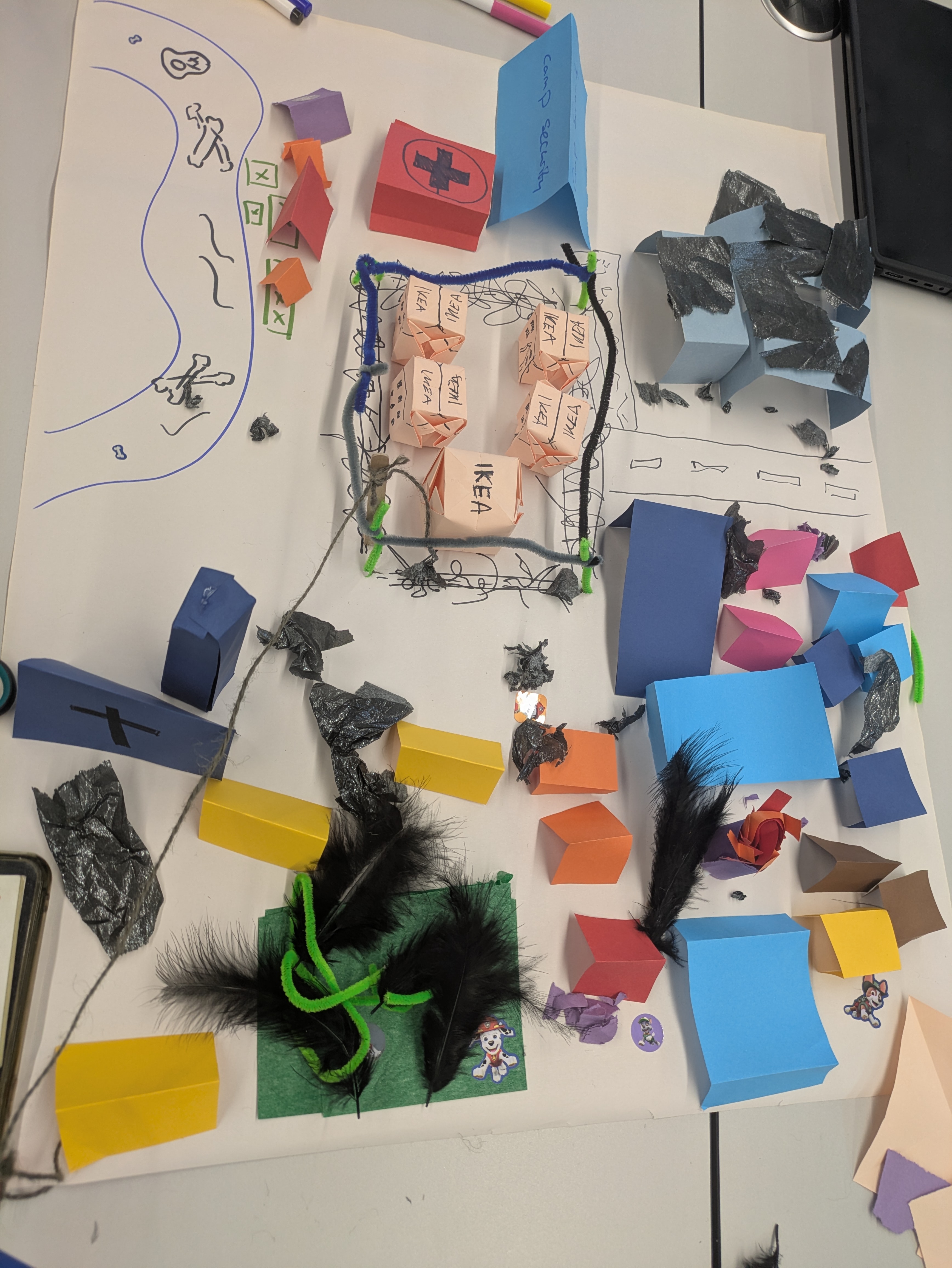
Figure 6
In camp settings, construction materials and settlement density are major contributors to fire outbreaks. However, fire risk cannot be reduced solely to material factors. It is also shaped by broader questions of security, identity, and social vulnerability. The lecture challenged standardised interventions that assume a universal subject of risk and technical solutions, emphasising instead the need for inclusive and context‑specific approaches to fire safety and risk reduction.
Effective fire risk reduction requires co-designing safety measures that reflect how people actually live with, experience and use fire within their specific environments, while recognising the differentiated vulnerabilities within the population. This, in turn, demands a reimagining of fire education – one that treats fire as a settlement‑wide, systemic concern rather than an issue with responsibility and blame confined to individual households.
END