
Research Project: Nigeria in the Antimicrobial Eras
Wellcome Trust-funded research project at CHSTM
The Nigeria in the Antimicrobial Eras project is a four-year research initiative funded by the Wellcome Trust. It provides context to three important themes, specifically examining shifts in the history of health system planning, drug regulation, antimicrobial stewardship, and surveillance in Nigeria.
Phase One: 1950s–1980s – Nigeria and the Rise of Antibiotics and Surveillance
This phase examines Nigeria’s engagement with global trends in antibiotic research and development, stewardship, and surveillance from the 1940s to the 1980s. The period marks a significant milestone in the history of antibiotics, coinciding with the advent of research on penicillin and the development of broad-spectrum antibiotics. During the 1950s and 1950s, the World Health Organisation promoted initiatives around penicillin production and mass treatment in developing countries. This era also saw the rise of therapeutic rationalist movements in the United States and parts of Europe.
We recognise that this period had profound implications for Nigeria’s health system – particularly its medical departments and research institutions. In this phase, we investigate how global ideas and developments were reflected in Nigerian institutions and shaped their activities.
Phase Two: 1980s–1990s – Global Healthcare Programmes and Drug Regulation
This phase examines the impact of international healthcare initiatives, such as the Primary Healthcare Programme and the Essential Drug List Programme, both introduced in the 1980s, on the availability and quality of antimicrobials in Nigeria. It examines the networks involved in antimicrobial procurement, the institutions responsible for quality control, and the emergence of regulatory bodies such as the Drug Regulation Department (which later became a standalone parastatal in 1993).
We analyse changes and continuities in the history of drug regulation and how it impacted on the procurement of antimicrobials in hospitals. Through this lens, the project highlights how global regulatory trends have shaped local pharmaceutical policies and innovations.
Phase Three: Antimicrobial Stewardship in Nigeria Since the 1980s
This section focuses on Nigeria’s engagement with global antimicrobial stewardship policies. It examines how globally-configured protocols on antimicrobial resistance were interpreted and implemented within the Nigerian context. By analysing selected government departments and hospitals across tertiary, secondary, and primary levels, the project investigates how stewardship policies were formulated and applied within healthcare institutions. It also traces the evolution of antimicrobial stewardship in Nigeria before and after 2015, when the WHO ratified the Global Action Plan against Antimicrobial Resistance.
Methodology
The study employs a qualitative approach, gathering primary data through archival research and in-depth interviews. Updates on research activities will be shared via the CHSTM Blog.
Community Engagement
Findings will be disseminated through workshops and seminars, engaging academic colleagues and key stakeholders. A major stakeholder engagement workshop will also be held in Nigeria at a later stage of the project.
The Research Team
The research team consists of three members: Adedamola Adetiba, Tolulope Fadeyi, and Titilayo Adeosun.
Adedamola serves as the principal investigator and is a research fellow at CHSTM. He is a recipient of the Wellcome Early Career Fellowship Award and holds a PhD in History from Rhodes University. His research experience includes postdoctoral fellowships at the University of Huddersfield, Rhodes University, and the African Humanities Programme. His research focuses on how communities at the socio-economic margins of global health, particularly in Africa, assert agency over medical knowledge and the local implications of medical ideas disseminated through imperial and international networks.
Tolulope is a research associate on the project and is nearing the defence of her PhD, which explores the history of maternal health and midwifery in Nigeria. She has previously served as a Research Associate and Honorary Research Fellow at the University of Basel, Switzerland, and City University of London, where she made significant contributions to understanding the historical frameworks shaping contemporary healthcare practices in Africa. With her extensive expertise in Nigeria’s maternal health history, Tolulope brings valuable historical insights into the evolving landscape of health policies and planning, particularly at the intersection of maternal health and antimicrobial resistance.
Titilayo is a research assistant on the project. She holds a bachelor’s degree in pharmacy from Obafemi Awolowo University and a master’s degree in public health from the University of South Wales. Her experience spans hospital and community pharmacy roles in Nigeria and over three years in project implementation with organisations like the Clinton Health Access Initiative and Accelerated Health Impact Solutions. She brings expertise in data collection, stakeholder engagement, research methodology, programme facilitation, and fieldwork.
If you have any questions about the project, please get in touch with the PI, Dr Adedamola Adetiba.
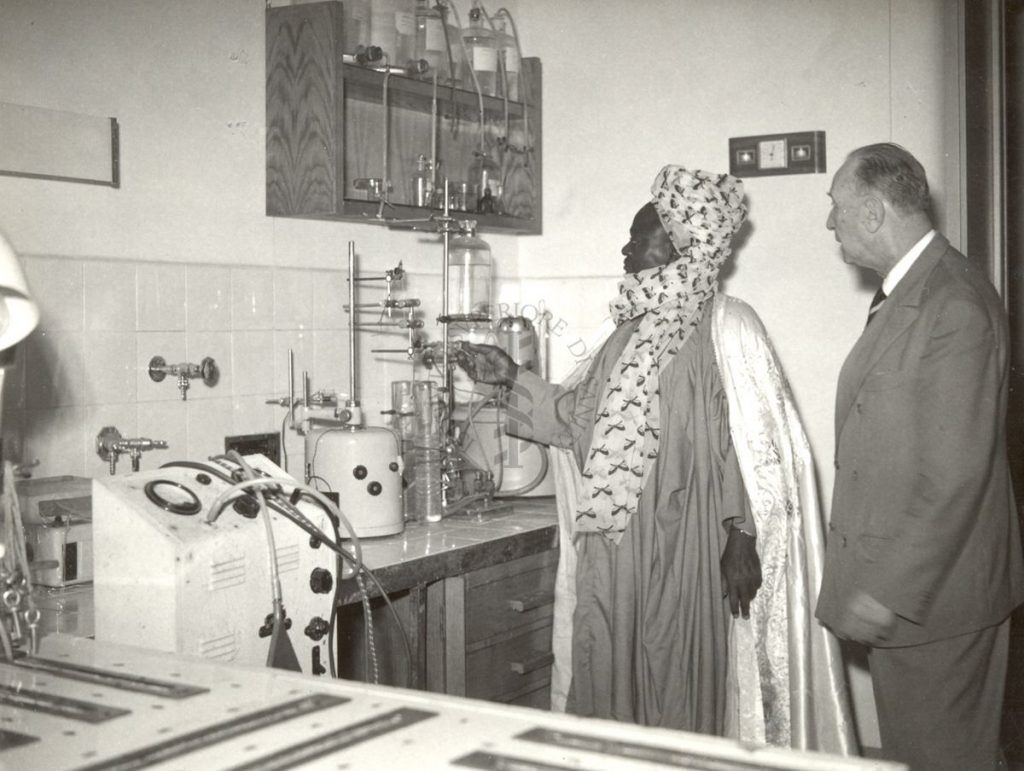
Image: Photograph of Dr Michael Okpara, one time premier of Eastern Nigeria and Minister of Health. He was on a visit to a laboratory in Italy in August 1960. The laboratory was renowned for research and development of antibiotics.


0 Comments