
CHSTM Research Seminar, 3 February 2026
3 February 2026, 4pm BST
Simon Building, Room 2.57 [maps and travel]
https://zoom.us/j/99626478734
Professor Matthew Cobb, University of Manchester
The life and times of Francis Crick, or why it sometimes matters who does science
Abstract: For many decades, historians of science (often retired scientists) focused on the lives of individual scientists and their contribution to discovery. Current historical interest focuses less on individuals, partly because most scientific discoveries are over-determined. For example, if Watson or Crick had fallen under a bus in 1952, then Franklin, or Wilkins, or Pauling, or someone would soon have discovered the double helix in their place. Furthermore, as Crick put it in 2000, ‘Discoveries and inventions are more important than the people who make them.’ But sometimes the individual does matter. After the double helix was discovered, none of the clever people involved – not Watson, nor Franklin, nor Wilkins, nor Pauling – sought to draw out the deep implications of the structure. Only Crick did that, and his ideas, and the way he proceeded, influenced the course of discovery and the way we now think about genes and cells and evolution. Had Crick fallen under a bus in 1954, the course of science would have been different. Crick’s life in science is unusual in that he made major contributions to two areas – molecular biology and neuroscience. He also developed an acute sense of how he wanted to do science and how he understood the process of discovery, which was linked to his interest in psychedelic poetry.
Matthew Cobb is Professor Emeritus of Zoology at the University of Manchester. He has published a number of trade books in the history of science, including The Egg & Sperm Race: The Seventeenth-Century Scientists Who Unravelled the Secrets of Sex, Life and Growth; Life’s Greatest Secret: The Race to Crack the Genetic Code; and The Idea of the Brain: A History. His latest book is Crick: A Mind in Motion – from DNA to the Brain.
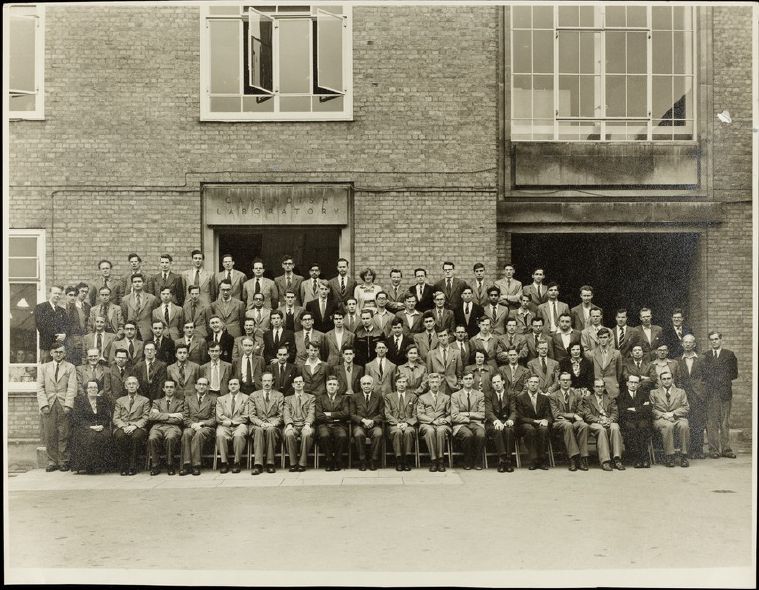
Image: Photograph of Cavendish students in 1952. Watson and Crick are in the second row, to the left.
All welcome!


Contact Us
+44 (0) 161 306 6000


0 Comments