
International Workshop on Epidemiological Surveillance in the Global South
Manchester, United Kingdom, 22-23 February 2027
While epidemiological surveillance is understood as a medico-technical or bureaucratic response to diseases occurrences and/or epidemic situations, it is also a historically situated, materially grounded, and socially embedded practice. Scholarship in the history of medicine, science and technology studies and medical anthropology has shown that surveillance activities emerge within particular political, epistemic and institutional contexts, revealing how diseases and populations are made visible and governable (Foucault 1977; Armstrong 1995; Bashford 2006; Weir and Mykhalovskiy 2010; Fearnley 2010; Barney 2014; Engelmann 2020).
Adopting such a perspective brings to the fore the fragile and often invisible epistemic, material and human infrastructures that undergird and enable surveillance (Keck and Lakoff 2013; Reubi and Cochrane 2025). These infrastructures include laboratories and diagnostic tests, medical categories and classification manuals, paper or digital reporting forms and records as well as social survey methodologies and mapping strategies. They also encompass scientific and expert networks, knowledge about diseases, environments, populations and cultures as well as philanthropic, commercial and state funding streams. Most importantly perhaps, they include the people who carry out surveillance – doctors in hospitals, technicians in the lab, data collectors at sentinel sites, entomologists in the field, activists in the community – with their concerns, interests and beliefs (Shapin 1989; Geissler and Molyneux 2011; Biruk 2018; Keck 2020).
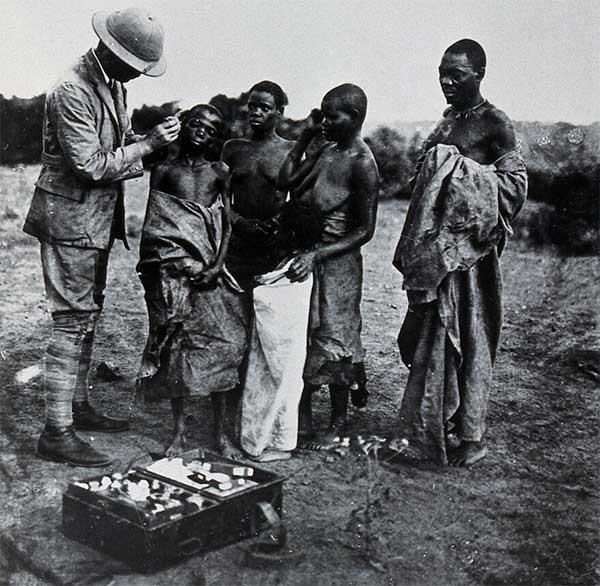
These infrastructures help make up the world in which we live (Hacking 2002; Law 2009; Boellstorff 2011; Lowray 2017; Reubi 2020). They bring about not just new kinds of people and societies but also new sorts of epidemics and diseases as well as pathological ecologies and environments. Surveillance infrastructures and their world-making powers are embedded in and shaped by scientific, political and commercial projects, whose beliefs, interests and hierarchies they, in turn, help support and reinforce. The medico-topographical surveys used by European military doctors during the nineteenth century colonization of Asia and Africa are a good illustration (Arnold 1993; Moussy 2015; Koch 2017).
As tools for knowing the tropical lands of jungles and fevers opened through military conquest, these surveys were key to ruling and exploiting the colonies, consolidating a fascination with physical geography and the relationship between climate, race, and health. Similarly, mid-twentieth century colonial tropical medicine experts and entomologists deployed ecological inspections and laboratory analyses to map the associations between climate, soil, plants, pathogens, animals and humans that, they believed, explained epidemics like yellow fever and malaria (Anderson 2004; Weibel 2015; Cummisky 2020).
Likewise, late twentieth century talk of a growing cancer epidemic in the global South based on data collection at sentinel sites and mathematical forecast modeling has been increasingly mobilised by postcolonies building national healthcare systems and transnational pharmaceutical companies in search of new markets (Vaughan 2018; Fraser et al. forthcoming).
We warmly invite anyone interested in contributing to discussions on the history and social study of epidemiological surveillance in the global south. We are interested in papers that engage with some of the following questions:
- How do different logics of epidemiological surveillance, including military, policing, and caring rationalities, coexist, overlap, or come into tension across historical contexts?
- What human, material, ecological, political, and epistemic infrastructures underpin epidemiological surveillance, and how are these infrastructures assembled, maintained, and transformed?
- How have projects of empire, postcolonial nation-building, and commercial interests shaped the development, organisation, and deployment of epidemiological surveillance?
- What scientific and political languages, narratives, and forms of knowledge production structure epidemiological surveillance practices and render diseases, epidemics, human and animal populations and ecologies legible?
- What material infrastructures and technologies, such as transport systems, laboratory equipment, digital platforms, satellite technologies, and paper or electronic reporting tools, are required for epidemiological surveillance to function?
- What human communities, expert cultures, and scientific networks are central to the operation and circulation of epidemiological surveillance systems?
- Who are the often-invisible technicians, intermediaries, and forms of labour that sustain epidemiological surveillance infrastructures, and how is their work organised and valued?
- What are the temporal afterlives of epidemiological surveillance infrastructures, including their persistence, decay, reuse, or transformation into new forms and practices?
- What does epidemiological surveillance produce, beyond the detection of disease itself?
The workshop will be the occasion to identify standout contributions for a forthcoming Special Issue on epidemiological surveillance in the global south, to be published in a leading journal. The workshop will be held in person, with limited hybrid access. It will take place over two days, starting at lunchtime on Monday 22 February and finishing late afternoon on Tuesday 23 February 2027, at the Centre for the History of Science, Technology and Medicine, University of Manchester. Lunch, coffee/tea and dinner will be provided. Limited funds for travel and accommodation will be available if needed.
The deadline for abstract submissions is 30 September 2026. Please send a 250-word abstract and author bio to Adedamola Adetiba (adedamola.adetiba@manchester.ac.uk), Thandeka Cochrane (tandeka.cochrane@anthro.ox.ac.uk) and David Reubi (david.reubi@kcl.ac.uk).
For further information, please contact Adedamola Adetiba, Thandeka Cochrane or David Reubi at the email addresses above.


Contact Us
+44 (0) 161 306 6000


0 Comments