
Pickstone Lecture 2026
We are delighted to announce details of the second Pickstone Lecture, held to commemorate Professor John Pickstone, founding director of the Centre for the History of Science, Technology and Medicine (CHSTM). The Pickstone Lectures explore how John’s work continues to play a major role in shaping our understanding of science, technology and medicine, both in the past and today.
The lecture will take place on Thursday 29 October, at 5pm in the Samuel Alexander Building, University of Manchester. Our speaker is John’s colleague and friend, Professor Roberta Bivins, whose talk is titled ‘A Positive Difference: Minoritised Communities in British Healthcare and Innovation’. The lecture concludes at 6.30 pm and will be followed by a drinks reception.
Roberta’s talk charts a new history of relations between minoritised communities and healthcare professionals in the United Kingdom. It draws on a common theme across John’s work by exploring how history can not only help us better understand the past, but can also have a positive impact how we organise and deliver healthcare today. It will interest colleagues from across the humanities, medicine and science, and all are welcome to attend.
There will be a live screening option for those unable to attend in person. The event is free, but you will need to pre-register to attend online or in person. Please follow this link to get tickets for either option.
Second Pickstone Lecture
‘A Positive Difference: Minoritised Communities in British Healthcare and Innovation’
Professor Roberta Bivins, University of Warwick
29 October 2026, 5pm BST
Samuel Alexander Building (Building No 67 on the interactive campus map)
There is a persistent narrative in UK biomedical and health services research that represents minoritised communities – particularly those which are racialised, but also those minoritised by gender, physical or mental capacity, or economic position – as ‘hard to reach’, mistrustful, costly or unreliable collaborators. In parallel, Britain’s news media has often framed racialised minorities as ‘hesitant’ or actively resistant to adopting medical innovations due to their (assumed) cultural differences from an imagined highly compliant majority community.
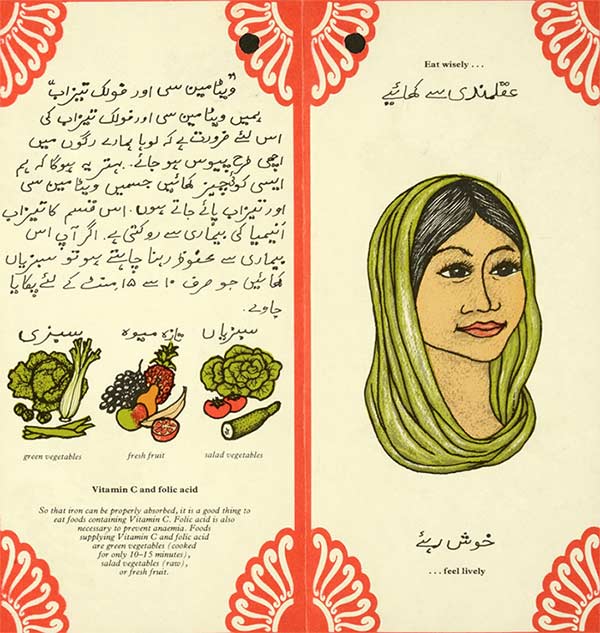
In contrast, historical research has uncovered a variety of cases in which the formation of ‘unimagined communities’ comprising medical researchers and ethnic minorities presents a very different picture of agency and active cooperation. In this talk I will explore examples of such research in multicultural Manchester, from S.W. Stanbury’s research on ‘Asian rickets’ in the 1970s to Steve Tomlinson and Kamila Hawthorne’s pioneering innovations in the provision of diabetes care in the 1990s. What can clinical and health services research learn from reaching the ‘hardly reached’? And how can history help to power this approach?
Roberta Bivins is Professor of History at the University of Warwick. She has a BA from Columbia University, a PhD from the Massachusetts Institute of Technology, and worked at CHSTM from 1997 to 2001. She has published widely on the history of health and migration, the history of alternative medicine and acupuncture, and the cultural history of the National Health Service. Her most recent book is Contagious Communities: Medicine, Migration and the NHS in Postwar Britain, and she also worked with John Pickstone to edit the volume Medicine, Madness and Social History: Essays in Honour of Roy Porter.


Contact Us
+44 (0) 161 306 6000


0 Comments