
Reflecting on the Global Research Experts Meeting at the World Intellectual Property Organisation (WIPO)
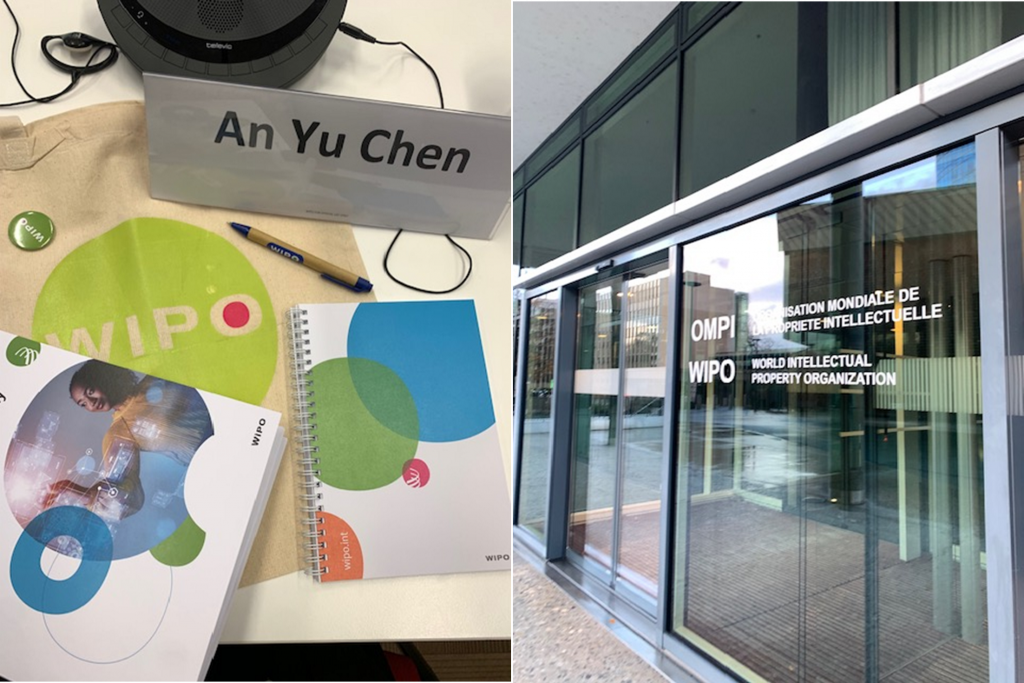
I had the privilege of participating in the second Global Research Experts Meeting hosted by WIPO on November 24–25, 2025. One of the things I appreciated most about the meeting was the opportunity to engage with experts from around the world, all of whom shared a zealous interest in using research to address gender gap and global challenges.
During the meeting, I learnt about the current situation of the gender gap in inventive activities and women’s chances in commercialising their innovations. One of the most striking themes that emerged was the extent to which gender influences both the creation and commercialisation of ideas and creativity from women. During the meeting, experts unpacked the socio-cultural dynamics that contribute to this. One instance, Dr Kijakazi Mashoto highlighted that limited awareness of IP regulations deepens the gender gap, an issue compounded by economic factors. Several of the empirical findings presented were particularly insightful. For example, Dr Carlotta Nani’s notes that women display lower awareness of patents and trademarks but are more familiar with designs and copyrights. It struck me that the challenges women face in accessing and utilising IP are complex. There is more to it, the spread of globalisation into rural areas and emerging markets raises important questions about how we can promote equality and inclusion in innovation across the globe. Due to socioeconomic factors, grassroots women entrepreneurs are often prevented from fully participating in the global economy, a point highlighted by many experts during the meeting. As AI continues to advance rapidly, there is also growing concern over algorithmic bias. This prompted me to think about how the gender gap affects new scientific discoveries and shapes our technological landscape. There’s just so much to unpack here, and this experience has inspired my ongoing research.
During my PhD, I’ve been digging into gender research ideas and have been discussing them with my supervisors, Prof Cornelia Lawson and Prof Silvia Massini. The deeper I become involved in this research, the more I feel like I’m part of something much larger than my own doctoral project. The gender research from my PhD has formed a basis of several speaking points for meetings and presentations during my WIPO visit. I gave a talk on whether the gender of inventors affects how they draw on scientific knowledge and whether inventors tend to gravitate towards science produced by researchers of the same gender. I refer to this phenomenon as gender homophily at the intersection of science and technology. This research opens up a bigger question about how inclusive — or exclusive — our innovation systems really are. It is equally important to ask who gets recognised, who gets cited and who gets to innovate in the intersection of science and technology.
A key part of my research investigates whether inventor teams systematically differ in their reliance on science. In this, I relied on data from reliance on science (Marx & Fuegi, 2020, 2022) to link patents to scientific publications. I draw on PatentsView for patent data, while the gender of scientific authors was drawn from SciSciNet (Lin et al., 2023). This allowed me to differentiate patterns of knowledge use at a large scale. One of the things I discovered is that female inventors draw more on science than male inventors. Female inventors also are more likely to draw on research produced by female scientists, implying that their inclusion may boost the utilisation of women’s scientific contributions. It’s profound for me to realise that because there are fewer female inventors than male inventors to begin with and due to gender homophily at the intersection of science and technology connections, less female scientific work will be seen by inventors. This discovery matters more than ever because it shows the causes of the gender gap in inventive activities.
My ongoing and relentless pursuit of research aimed at closing the gender gap in global innovation has been continuing. In my recent analysis, I operationalise collaborative openness as a composite measure combining scientific engagement, team size and gender composition. What I found is that innovation teams that embrace more open collaboration structures tend to be more likely to draw on female-authored science (see Figure 1). One reason might be that openness reduces coordination barriers and increases exposure to unfamiliar knowledge, which is why openness and collaboration are widely regarded as central mechanisms shaping how scientific knowledge diffuses (Chesbrough, 2003; Perkmann et al., 2013).
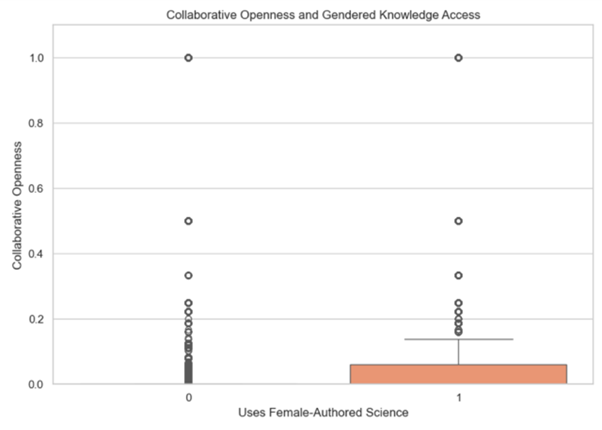
Figure 1: Collaborative Openness and the Use of Female-Authored Science in Patents. Source: PatentsView USPTO patent data and patent linkages from Reliance on Science to publications and gender prediction using PatentsView derived from WIPO WGND.
Figure 1 shows the distribution of collaborative openness for patents that do not cite female-authored scientific research (0) and those that do (1). Collaborative openness is measured as Uses Science × (1 / Team Size) × (1 − Male Ratio), capturing the extent to which patent teams are open to external scientific knowledge and gender diversity. The figure illustrates that higher levels of collaborative openness are associated with a greater likelihood of incorporating female-authored scientific research. Patents with unknown gender classifications are excluded in the visual. The total sample comprises 466,310 patents.
To push this further, I construct a measure of gender knowledge diversity. This metric captures the gender composition of cited scientific knowledge and the measure is maximised when innovation teams draw evenly from male- and female-authored science. What I found here is that patents that do not cite female-authored science exhibit lower and more tightly clustered levels of network closure (Figure 2). Notice, patents that do not use female-authored science tend to come from more homogeneous teams (see Figure 3). What’s crucial is the result that patents that do cite female-authored science show a higher median level of network closure alongside substantially greater dispersion. Potentially, it’s helpful to think of openness and inclusion in science as a starting point for innovation.
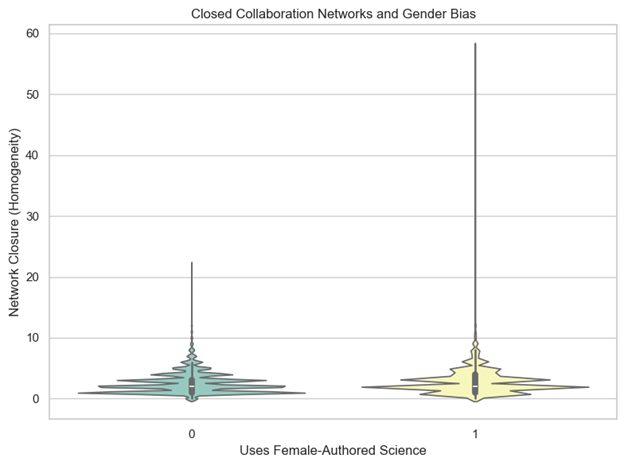
Figure 2: Network Closure and the Use of Female-Authored Science. Source: PatentsView USPTO patent data, and patent linkages from Reliance on Science to publications and gender prediction using PatentsView derived from WIPO WGND.
Figure 2 shows the distribution of network closure for patents that do and do not cite female-authored scientific research. It captures the extent to which collaboration networks are homogeneous or diverse.
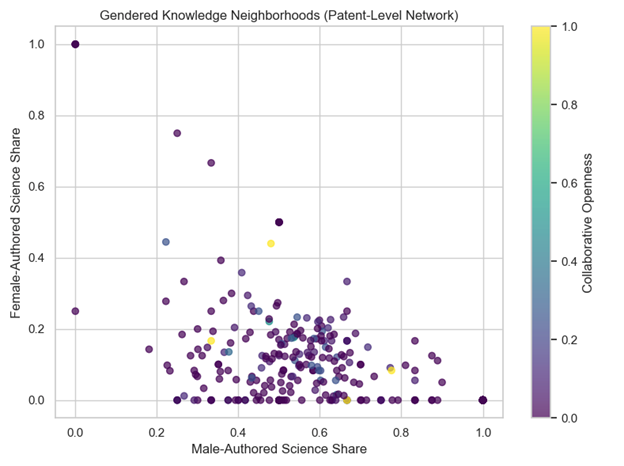
Figure 3: Gendered Knowledge Neighbourhoods Source: PatentsView USPTO patent data, and patent linkages from Reliance on Science to publications and gender prediction using PatentsView derived from WIPO WGND.
This visualisation plots the share of male-authored science against the share of female-authored science cited by individual patents (Figure 3). Each point represents a patent, and the colour gradient indicates the level of collaborative openness.
Ultimately, this study has been helping me take a fresh look at innovation systems. It reinforces the idea that equality and inclusion are essential for potentially better and more creative science and technology. Gendered patterns of knowledge use are deeply embedded in collaboration networks; the findings help us reckon with what it is going to mean to create more inclusive innovation systems. We must pay attention to gender inequality in knowledge use.
This journey has been profoundly rewarding. I’m increasingly convinced that addressing the gender gap in innovation isn’t just about promoting better inventive outcomes; it’s about ensuring that equality, diversity and inclusion are truly representative of all perspectives. I am reminded that every small step in bridging the gender gap makes a big difference. I am grateful to MIOIR for supporting my research and my visit to WIPO (Figure 4). This trip not only provided valuable insights for my research but also deepened my understanding of the importance of building connections with experts who care about using research to make the world better. This perspective has inspired me to continue investigating ways to promote gender diversity in innovation and IP and I look forward to the impact this research will have in shaping future policies.
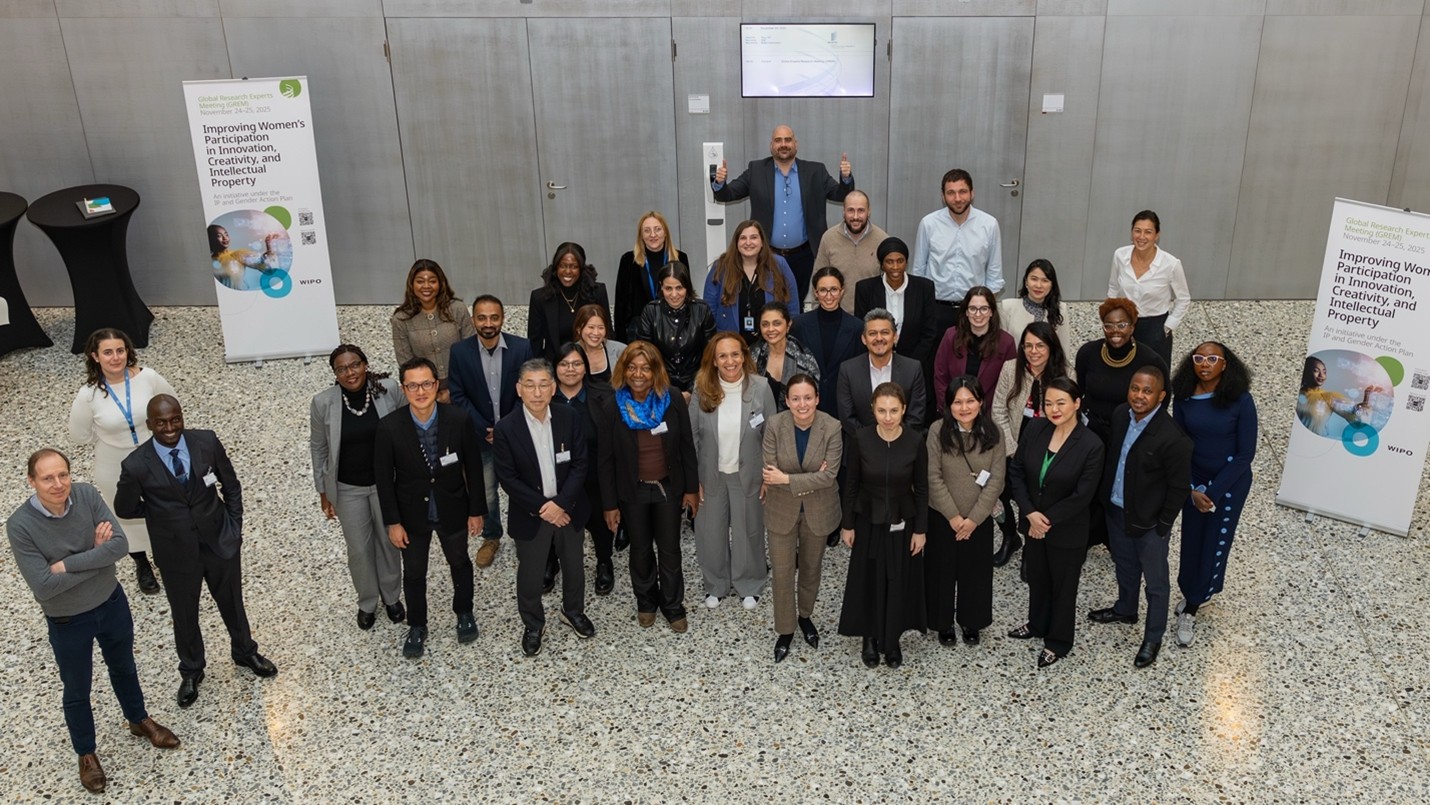
Figure 4: Group Photo of Global Research Experts Meeting on Improving Women’s Participation in Innovation, Creativity, and Intellectual Property. This event was held at the WIPO Headquarters in Geneva on 24–25 November 2025. Copyright: WIPO. Photo: Emmanuel Berrod. This work is licensed under a Creative Commons Attribution-NonCommercial-NoDerivatives 4.0 International License.
References
Chesbrough, H. W. (2003). Open innovation: The new imperative for creating and profiting from technology. Harvard Business School Press.
Lin, Z., Yin, Y., Liu, L., & Wang, D. (2023). SciSciNet: A large-scale open data lake for the science of science research. Scientific Data, 10(1), 315.
Marx, M., & Fuegi, A. (2022). Reliance on science by inventors: Hybrid extraction of in‐text patent‐to‐article citations. Journal of Economics & Management Strategy, 31(2), 369-392.
Marx, M., & Fuegi, A. (2020). Reliance on Science: Worldwide Front-Page Patent Citations to Scientific Articles. Strategic Management Journal, 41(9), 1572-1594. https://onlinelibrary.wiley.com/doi/full/10.1002/smj.3145
Perkmann, M., Tartari, V., McKelvey, M., Autio, E., Broström, A., D’Este, P., … Sobrero, M. (2013). Academic engagement and commercialisation: A review of the literature. Research Policy, 42(2), 423–442.
About the Author:
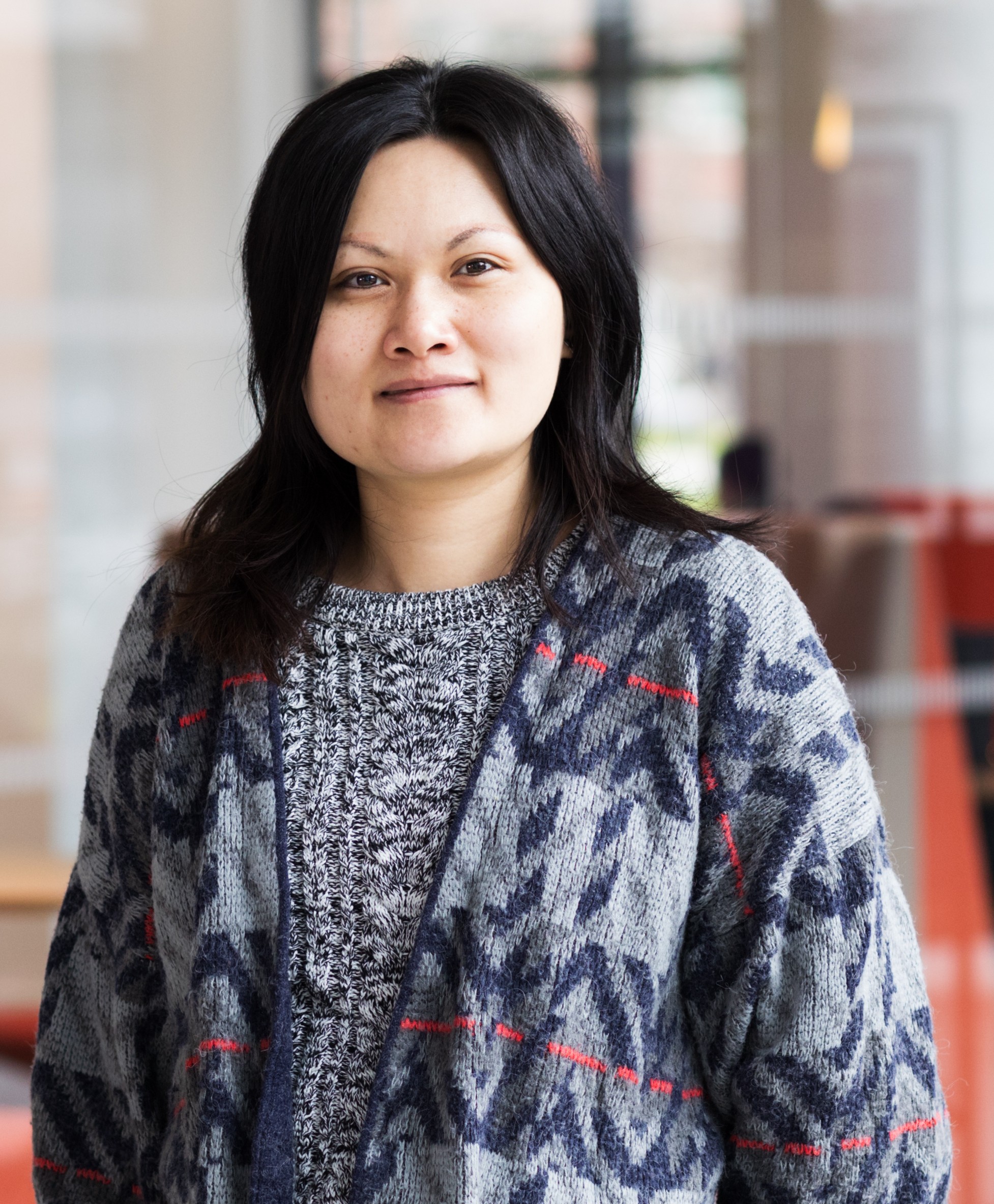
As a Doctoral Researcher and Research Associate at the Manchester Institute of Innovation Research, An Yu is particularly interested in uncovering the connection between science and technology, with a focus on delivering actionable insights for science and innovation policy. For more information, please visit her research profile.
This blog was written by An Yu Chen, with thanks to Holly Crossley and Debbie Cox for their help with reviewing and editing.
Contact Us
+44 (0) 161 275 0924


0 Comments