
PPIE Award Winner 2025: Dr Keith Geraghty and Prof Aneez Esmail
In this blog series, we will be featuring our award winners and highly commended recipients from the Faculty’s ‘Outstanding Contribution to PPIE’ awards. The awards showcase inspirational and outstanding commitment to PPIE that has made a positive difference to our community and highlights the amazing events, activities, people and groups from across the Faculty.
Our latest blog in this series features Dr Keith Geraghty and Prof Aneez Esmail, who were winners in the group category at the 2025 PPIE Awards. Their research on myalgic encephalomyelitis (or encephalopathy)/chronic fatigue syndrome (ME/CFS) drove significant changes to national guidelines, creating a worldwide impact on how the condition is treated today.
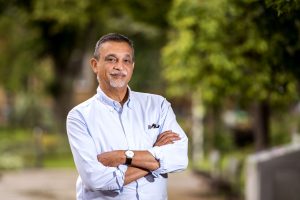
Professor Aneez Esmail. Photo credit: Anthony Devlin
Dr Keith Geraghty, Research Associate of Health Psychology, and Prof Aneez Esmail, Emeritus Professor of General Practice, have collaborated at the University since 2016. Their work has focused on myalgic encephalomyelitis (or encephalopathy)/chronic fatigue syndrome (ME/CFS), a condition that profoundly impacts quality of life.
Their research challenged the long-standing biophyscosocial model that had shaped the understanding of ME/CFS, providing evidence that led to major changes in the diagnoses and management of the condition, as outlined in the 2021 National Institute for Health and Care Excellence (NICE) guidelines.

Dr Keith Geraghty
These updates removed harmful treatments such as Graded Exercise Therapy (GET) and reframed care around patient choice and energy management. Keith’s unique perspective as both a researcher and an ME patient was central to this process, ensuring that lived experience informed every stage of their work.
Reflecting on the significance of these changes, Keith remarked:
“Scientists must continue to research the biological facets of this disease, including causes and bio-physiological dysfunction brought about by ME/CFS. Whilst this work is ongoing, doctors and allied health professionals must look to support patients manage and ameliorate symptoms.
This new guideline marks a departure from biopsychosocial outdated models of ME/CFS to one that recognises the clinical features of this disease, its impact on people living with ME/CFS and the importance of doctors and patients working collaboratively to achieve the best outcomes possible.” (Source: Doctors with M.E.)
The impact of Keith and Aneez’s research extended beyond clinical practice. Their findings were referenced in parliamentary debates, and they contributed expertise to Scottish MSPs and the Minister of Health on improving care for ME/CFS patients.
During the COVID-19 pandemic, their work continued to play a role. Due to the similarities between the symptoms of Long COVID and ME/CFS, their research laid the groundwork for researchers understanding Long COVID since 2020.
Additional information:
- Dr Keith Geraghty and Prof Aneez Esmail’s publication: Chronic fatigue syndrome: is the biopsychosocial model responsible for patient dissatisfaction and harm?
- NICE Parliamentary Questions (Discussion on the new 2021 NICE guidelines)
- The ME Association
To find out more about PPIE: watch our short film, sign up to the monthly Public Engagement Digest, visit the PPIE blog, or contact srbmh@manchester.ac.uk.
To read more about other PPIE Award winners visit here.
0 Comments