
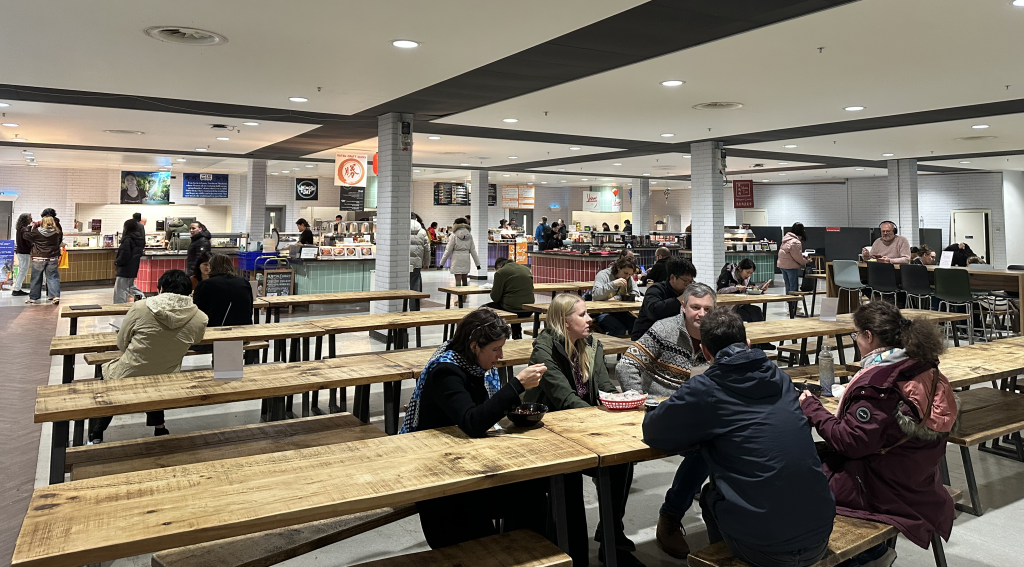
From waste to reuse: How the Bee Bowl is transforming The Market
Picture an overflowing general waste bin, with recyclables, single-use cutlery and food waste spilling over the edge and onto the floor. Nobody wants to see that, much less in a food court where people are eating.
The food waste and recycling problem
Unfortunately, this was the reality of The Market at The University of Manchester since the COVID-19 pandemic. During this period, reusable crockery was replaced with disposable takeaway containers for hygiene reasons. Despite multiple recycling stations and food waste bins around the market, they were often underused. This was largely due to unclear disposal guidance and, at times, the simple convenience of putting everything into general waste.
The result was not only an unpleasant environment, but added to growing concerns around excessive food and plastic waste that could have been avoided or diverted into appropriate recycling streams.
The Bee Bowl solution
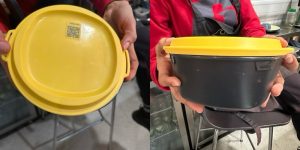
Bee Bowl, top view (left) with QR code for scanning and borrowing, side view (right).
To tackle all these issues, the Bee Bowl scheme was introduced at the start of the 2025/26 academic year. Similar to the Bee Cup, which rolled out around a year ago, staff and students can borrow a reusable Bee Bowl when ordering food, both for eating in or taking food away. The bowl can be kept it free of charge as long as it is returned within 14 days.
Sadie Jackson, Head of Retail at the University, manages all cafés on campus as well as The Market. She spoke about the impact of the Bee Bowl during an interview:
- Positive reception and smooth implementation: Vendors at The Market were introduced to the Bee Bowl in September, giving them time to understand the process and explain it clearly to customers. By October, the Bee Bowl was officially launched and quickly gained acceptance from key stakeholders, signalling a strong start.
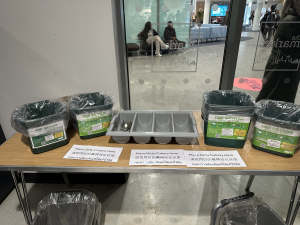
Recycling station with small food caddies and cutlery organiser. Instructions are printed in three languages (English, Chinese and Thai).
- Improved management of food waste: Large general waste and food waste bins have been replaced with smaller bins and food caddies. As Bee Bowls cannot be thrown away, customers must first separate any leftover food into the appropriate food caddies before either keeping or returning the bowl, resulting in more consistent and effective waste segregation.
- Encouraged sustainable behaviour among customers: As part of the scheme, vendors now charge an extra £1 on orders if single-use takeaway containers are requested instead of the Bee Bowl. This incentive, mirroring the Bee Cup, has proven highly effective in nudging students and staff to use the Bee Bowl more often.
Next steps and legacy
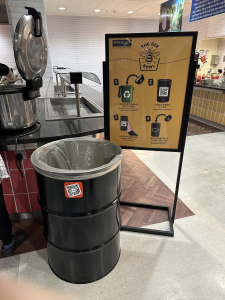
Bee Bowl return station with large bin for Bee Bowl collection and a poster with instructions on how to return.
Currently, all vendors at The Market serve food in reusable bowls and plates by default, alongside the Bee Bowl as an option. A single recycling station is set up near the entrance of The Market, making it easy for customers to return their reusable cutlery before leaving. This station is manned by a member of staff to help new users sign up or navigate the Bee Bowl scheme, while ensuring food waste is disposed of in the small food caddies before the containers are returned. Looking ahead, Sadie hopes that clearer signage and improved station design will allow the scheme to operate more independently, without the need for constant supervision.
Beyond creating a more hygienic and pleasant environment at The Market, the Bee Bowl scheme plays an important role in reducing the University’s environmental impact. By cutting down on single-use cutlery and takeaway containers, the scheme has the potential to lower operational costs and reduce Scope 3 (indirect) emissions, supporting the University’s Environmental Sustainability Strategy.
Support this initiative and start using the Bee Bowl and Bee Cup by downloading the Vytal app today. New users of the Bee Cup can also enjoy a free drink with their first use.
Additional information
Follow The Market on their socials:
Read more about the success of the Bee Cup from partners:
- In Our Nature | Case Study: Trialling a returnable cup scheme in cafés along Oxford Road
- Manchester City Council | The Bee Cup | Action for businesses and organisations
- StaffNet | The Bee Cup launches across campus
To stay up to date with all the latest news from the FBMH Environmental Sustainability team, you can follow @FBMH_SR on X (Twitter) or sign up to our quarterly ES Newsletter by emailing srbmh@manchester.ac.uk.
0 Comments