
Addressing Transport Inequalities in Global South Cities | Emma Tsoneva & Karen Lucas
Who gets a say in how urban transport is planned and operated? Emma Tsoneva and Karen Lucas reflect on the conference, Addressing Transport Inequalities in Global South Cities co-hosted by Manchester Urban Institute in May 2026.
Closing the mobility gap for all
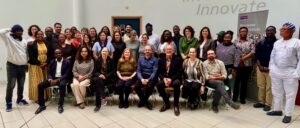
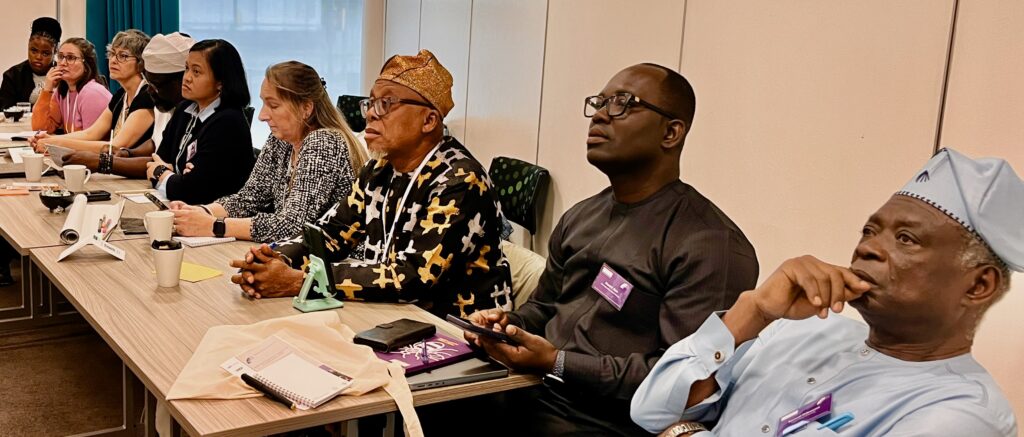
The conference Addressing Transport Inequalities in Global South Cities (Manchester University 19-21 May 2026) highlighted the gap between transport policy and the lived experiences of low-income communities. The event brought together 48 delegates from Africa, Asia, Europe, and Latin America, including global experts, community representatives, and early career researchers.
We established that for most low-income people in the global south, travelling to work, school or to see a doctor is shaped less by choice than by exclusion from the design of the transport systems in their cities. As cities grow, new transport infrastructure largely responds to the priorities of international funders and urban elites, leaving poorer people who most need improved mobilities with little say in how they’re planned and operated.
Hearing directly from the Mukuru community
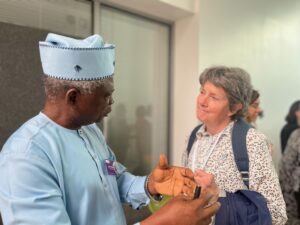
A starting point of the conference was how to close the gap between policy and people’s lived experiences and mobility needs. One highlight for us was a keynote conversation between Stephen Okoth, a community representative from Mukuru settlement in Nairobi, and Winnie Mitullah, University of Nairobi. They discussed the impacts of the redevelopment projects in Mukuru, including the major new toll road that bypasses the community. Stephen brought a fresh perspective to proceedings and highlighted the importance of including people with firsthand experience of everyday challenges in mobility debates.
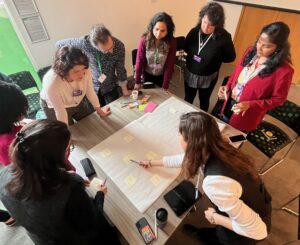 We also enjoyed the workshop style of the conference and the opportunities it offered for deep and meaningful engagement of the specific mobility issues for different population groups in different countries and locations. We explored a wide range of methodologies used to collect data on people’s mobility practices, the condition of the transport systems in the areas where they live and potential solutions to improve their mobility experiences and accessibility outcomes. The lively poster session provided a useful way to engage more with specific projects that delegates were working on.
By bringing together researchers, practitioners and community representatives, the conference created the time and space to challenge our embedded assumptions, share experiences and build new collaborations. Above all, it reinforced the message, running through every presentation and workshop, that transport policy and practice can only become more equitable when the everyday experiences of those who are most affected by it are part of the conversation about how it should be designed, planned and operated.
About the conference programme
Hosted by Manchester Urban Institute’s affiliate network, INTALInC (the International Network for Transport and Accessibility in Low Income Communities), the conference also fostered useful collaboration with the Volvo Research and Education Foundation (VREF) international research programmes – PRISM: Partnership for Research on Informal and Shared Mobility and the Walking for Cities Lab. We collectively agreed that improving walking environments and informal transit service are the most effective way to improve the mobilities of vulnerable and marginalised population in global south cities.
Addressing Transport Inequalities in Global South Cities was organised across two parallel strands of interactive workshop sessions. Strand 1 considered themes around the mobility needs of marginalised population groups, specifically children, women and girls, older and disabled people, and informal settlers. Strand 2 discussed the role of different modes of transport and governance framings and processes that could support these needs, specifically walking, popular transit, road safety and mobility governance. The workshops were interspersed with keynotes designed to stimulate wider discussions. Keynote presentations included:
- Just Transitions: Unlocking people-centred mobility in a decarbonising world
Carly Gilbert-Patrick, SLOCAT - Caring Cities: Reimagining urban futures through connected infrastructure
Tanu Priya Uteng, Norwegian Institute of Transport Economics - Food, Care and Spatial Accessibility: Research methods, evidence and public policies in Chile
Juan Antonio Carrasco, Universidad de Concepciõn - Transitions, Technology and Transport Justice: Popular transport in turbulent times
Jacqueline Klopp, University of Columbia - Mind the (Policy) Gap: Are evidence-based policies addressing transport inequalities?
Jim Walker, Walk21 - Understanding Transport Injustice: Reflections and outlook
Tim Schwanen, University of Oxford.
The Next Generation Scholars (NGS)
Through our partnership with VREF, we hosted 12 early career researchers from Kenya, South Africa, Brazil, Mexico, Nigeria, India, Uganda and Costa Rica to Manchester. As well as playing an active part in the workshop discussions, NGS presented posters at a dedicated session, with a prize awarded to Fathima Zehba (National Institute of Technology, Calicut) for her work on women’s everyday mobility in Kochi. Jessica de Lima (Federal University of Alagoas) was also highly commended for her research on motorcycle use, accessibility and equity in Brazil.
Jane Summerton (VREF) noted that, “it was particularly encouraging to see all the young researchers, particularly young women, who are doing such interesting work with insightfulness, determination and passion”.
What’s next?
 Building on ten years of research with low-income communities, city planners, policymakers and frontline NGOs working across Africa, Latin America and Southeast Asia, INTALInC has grown into a network of around 400 members. The discussions in Manchester provide INTALInC’s next springboard, looking ahead to becoming a formal partner in the PRISM and Walking4Cities research programmes, contributing to PRISM’s GLOCON paper review process, and many conference contributors working towards an open access volume of conference proceedings with Procedia.
Emma Tsoneva is Research Manager at Manchester Urban Institute and Network Coordinator of INTALInC. Karen Lucas is Director of both Manchester Urban Institute and INTALInC.
Addressing Transport Inequalities in Global South Cities | Emma Tsoneva & Karen Lucas
0 Comments
Submit a Comment
Contact us
+44 (0) 161 306 6000


0 Comments