
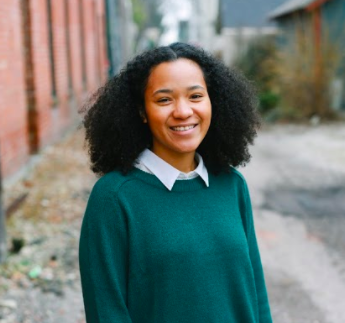
Dr. Dominique Burrows: Black History Month is about honouring the past while shaping a more equitable future.
Finding Belonging Across Borders
Growing up in the Bahamas, living in the United States, and now calling the UK home, my identity as a Black woman has been shaped by the places I’ve inhabited. Each country has shown me different ways of understanding race, gender, and what it means to belong. What hasn’t changed is the resilience I’ve needed to navigate systems that weren’t built with people like me in mind. Black History Month’s 2025 theme, Standing Firm in Power and Pride, speaks to something I know well: flourishing as a Black woman in higher education means carrying forward histories of struggle while celebrating the joy that comes from perseverance.
Black History in the UK
Black history in Britain stretches back centuries, woven into the fabric of the nation in ways that are often overlooked. The Windrush Generation exemplifies this complexity perfectly. Invited to help rebuild post-war Britain, these Caribbean migrants faced discrimination even as they filled crucial roles in healthcare, transport, and countless other sectors (Olusoga, 2016). Their children and grandchildren continued building on these foundations, often in the face of hostility and exclusion. The 1970s and 1980s brought a different kind of resistance. Black British communities refused to accept systematic racism quietly. The Brixton uprisings and grassroots campaigns against police harassment showed what standing firm looked like in practice (Gilroy, 1987). More recently, movements like Black Lives Matter UK have pushed these conversations forward, demanding not just awareness but structural change (Andrews, 2021). These moments remind us that standing firm isn’t just about surviving, it’s about actively shaping the nation through activism, creativity, and sheer determination.
Manchester’s Legacy
Manchester occupies a special place in this story. During the 19th century, the city became central to the anti-slavery movement (Revealing Histories.; Science and Industry Museum, n.d.). Mill workers famously boycotted slave-produced cotton, accepting economic hardship for moral principle (cite; Blackburn, 2011). Later, neighbourhoods like Moss Side became home to vibrant African Caribbean communities whose cultural and social contributions fundamentally shaped Manchester’s character (Alexander, 2018). Today, Manchester continues this tradition of activism and solidarity. The city honours its legacy of resilience while building on it. At the University, Black scholars and students are part of this ongoing narrative, helping to imagine what truly inclusive education might look like.
Looking Ahead
Black History Month isn’t just about looking backward. It’s about building the future we want to see. For me, standing firm in power and pride means honouring those who paved the way, celebrating what Black communities contribute today, and working toward a future where equity and inclusion are lived realities rather than distant goals. Black history isn’t something that happened in the past. It’s being written every day in our classrooms, workplaces, and communities. We’re all part of that story.
Written by Dr. Dominique Burrows – Assistant Professor (Lecturer) of Organisational Psychology, Alliance Manchester Business School
References:
Alexander, C. (2018). The Art of Being Black: The Creation of Black British Youth Identities. Oxford University Press.
Andrews, K. (2021). The New Age of Empire: How Racism and Colonialism Still Rule the World. Bold Type Books.
Blackburn, R. (2011). The American Crucible: Slavery, Emancipation and Human Rights. Verso Books.
Gilroy, P. (1987). There Ain’t No Black in the Union Jack. Hutchinson.
Olusoga, D. (2016). Black and British: A Forgotten History. Macmillan.
Revealing Histories. (n.d.). Manchester, cotton and anti-slavery. Revealing Histories. Retrieved from http://revealinghistories.org.uk/the-american-civil-war-and-the-lancashire-cotton-famine/articles/manchester-cotton-and-anti-slavery.html


Contact Us
+44 (0) 161 306 6000


0 Comments