
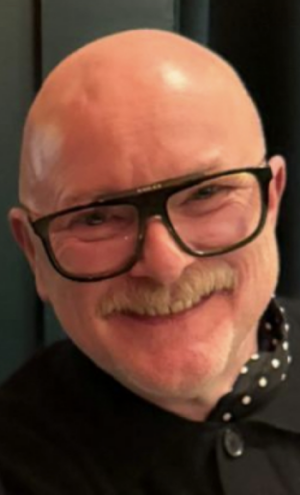
Stephen Doyle: Why Pride Matters to Me
Saturday 1st August 2026 marked Lanarkshire Pride. This is its fourth year.
So why is a small event in a small town noteworthy?
The larger, city-based Pride events and marches tend to get the most attention, and they are important, not least because they tend to be the starting place for Pride events in most countries and they have power in through presence. They can, however, feel adrift from the local community.
In this respect, local, grassroots’ Pride events have an important role to play for promoting visibility, inclusion, and community connectedness for LGBTQ+ people who don’t have access to larger city-based celebrations or who may benefit from seeing themselves represented close to where they live, work and / or study. This one day in the year event can have lasting impact by helping LGBTQ+ people, giving them voice, visibility and community. As such, they can be especially important for individuals living in rural or smaller urban areas where a lack of visible LGBTQ+ communities may contribute to discrimination, isolation and lower levels of connectedness.
Thinking about Lanarkshire Pride, it is organised by volunteers focusing on community needs rather than commercial interests. It brings together activists, support groups, healthcare providers, and equality organisations, which in turn helps to ensure that issues such as mental health, hate crime reporting, youth support, trans inclusion, and intersectionality remain central to the event, and are highlighted to the wider local community.
Connected to Lanarkshire Pride are weekly drop-ins for members to come together in a safe space. This emphasises that Pride can be much more than a moment in time, it can be a fulcrum that support a range of other activities throughout the year, and that its value can be public display or quiet refuge. However Pride is organised, it should be enduring and transforming.
So back to my question, why is this noteworthy?
There are two reasons.
Firstly, I was born in the 1960s in a rural village in Lanarkshire. I went to school there. This was a time when gay and lesbian visibility was almost non-existent (a few decades had to pass before we arrived at LGBTQ+). Discussions around sexual orientation and identity were rare, and even rarer were positive, supportive conversations. The idea of a Lanarkshire Pride would have been unimaginable to me.
While I am sure that, on the day, there would have been local Lanarkshire folk in denial of our existence or our right to exist, we didn’t see them or hear them. On the day there was a sense of welcome, of joy, of recognition and of community membership, but also of a common protest, of solidarity and of support, and it struck me about how much that matters, especially to young people trying to find a secure place in the world.
As a local lad, it made me proud to see somewhere I know so well, and have known for so long, change so much.
Secondly, this year, Village Pride will, like Lanarkshire Pride, be a more grassroots, community orientated event – for the community, by the community and with the community. There is a galvanising power, and a particular relevance to grassroots movements that can be potent, and it reminds us of why Pride started; to support, to celebrate, to protest, and hopefully to progress.
Finally, and because they never get the public credit they deserve, I want to say a thank you to our Pride Committee, all of whom are volunteers. They have once again ensured that the university’s LGBTQ+ community university will be supported and celebrated at Village Pride, and that we can protest and, hopefully through our visibility and voice, progress.
By Stephen Doyle
Co-chair (Academic) BeeProud
UoM UCU LGBTQ+ Executive Member
Contact Us
+44 (0) 161 306 6000


0 Comments