
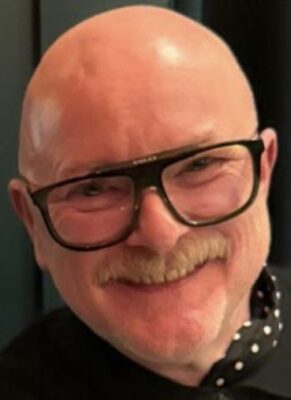
Stephen Doyle: National Coming Out Day
The 11th October is National Coming Out Day, a day that celebrates LGBTQ+ visibility and the freedom to live openly as ourselves. As such, it is an important day in the calendar for the LGBTQ+ community.
I’d like to take a slightly different angle, the idea of a single coming out day feels too simple, too one-off to me.
For many of us in the LGBTQ+ community, we do not come out once. We come out again, and again, and again. In fact, I’m doing it right now in this blog.
Perhaps, however, the first person we come out to is ourselves.
Before telling anyone else, there was a private, internalised conversation that involved recognising something about myself; trying on the words that best described me, rejecting some, looking for others and becoming comfortable enough to say “This is me.”
That can take time. It did for me.
Coming out to ourselves can require its own kind of courage, and understanding who we are does not mean we are immediately ready to share it with anyone else.
I first ‘sort of’ came out to someone else when I was 13, in 1978. I say sort of because I’m not sure I had the right vocabulary, or maybe it’s more the case that the words were weaponised. They still are. For me, part of the early journey was owning the language and neutralising the toxicity.
Coming out doesn’t happen in a vacuum. It happens in the context of the world around us.
In Britain in 1978, the legal landscape was complex and inconsistent. The Sexual Offences Act 1967 had partially decriminalised sexual activity between men in England and Wales, but only under particular circumstances and where the men were over 21. Equivalent reform had not yet happened in Scotland and Northern Ireland, where changes came in 1980 and 1982 respectively.
Moreover, changing the law did not change society. In 1983, research suggested that 50% of British adult population viewed same adult sex relationships as ‘always wrong’. This figure had increased to 64% by 1987. In 1988, Section 28 became law, restricting local authorities from what the legislation termed the “promotion” of homosexuality. Unjustifiable as this was, its impact in fact went further, creating a climate of self-censorship
Looking back almost half a century later, I am struck by how different the world (some of) the world is (and yet unfortunately how familiar). Gains have been made: the age of consent has been equalised; civil partnerships and marriage equality and The Equality Act 2010 offers legal protections. But we also see that these rights can be vulnerable, that social attitudes can shift. In this context, National Coming Out Day is a day work marking.
For me, it turns out that telling someone in 1978 wasn’t the end, but the start. Nobody told me that when I was 13!
Over the years there have been new friends, new colleagues, new jobs and countless everyday conversations. There have been numerous occasions when I’ve corrected assumptions about my relationships, such as “not my brother”, as people consciously or unconsciously erase non-heteronormative relationships.
Throughout that journey we may also choose to be out in some parts of our lives but not others. Someone might be out at university but not at home, with friends but not family, or with some colleagues but not others. This can be particularly important in the early stages of coming out, when we are still discovering what feels right and where we feel safe.
And that is okay. Coming out is not all or nothing.
For some people, the consequences can be much greater. ILGA World continues to document laws around the world criminalising consensual same-sex sexual activity, including jurisdictions where the death penalty remains a possibility. For some LGBTQ+ people, therefore, choosing not to come out can be an act of self-protection.
National Coming Out Day is not an expectation that everyone should be out.
Today I think about those who are out, those taking their first tentative steps, those who are out in some parts of their lives but not others, and those who have told nobody yet but have quietly begun to acknowledge who they are to themselves.
That is coming out too. Coming out can take many forms.
Almost half a century after I first came out to someone else, I know that coming out isn’t something we do once and leave behind. Sometimes we do it confidently. Sometimes we decide that today isn’t the day, and those are all valid choices.
Ultimately, the goal should not be a world in which everybody has to come out. It should be a world in which nobody is afraid of what might happen if they do.
Stephen Doyle
Academic Co-Chair BeeProud / UoM UCU LGBTQ+ Executive Member
Contact Us
+44 (0) 161 306 6000


0 Comments