
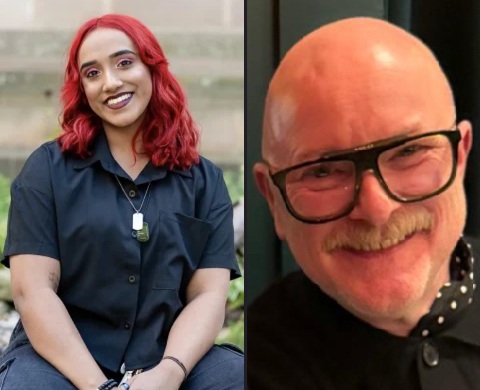
Aisha Akram and Stephen Doyle: Lesbian Visibility Day
April 26 marks Lesbian Visibility Day and is the culmination of Lesbian Visibility Week. This is an important moment, marked in the calendar to recognise, celebrate, and uplift lesbian identities, experiences, and contributions. While progress has been made in advancing LGBTQ+ rights and representation, lesbian voices have often been underrepresented – even within broader queer spaces. This day therefore plays a vital role in addressing that imbalance and ensuring that lesbian identities are seen, heard, and valued.
Not only does society fail to view queer women’s relationships as real, but it also erases what lesbians did for the wider LGBTQ+ community throughout history. During the HIV and AIDS epidemic, while lesbian women were fighting alongside gay men. they received misogynistic backlash from some gay men who believed this movement should solely focus on them.
Nevertheless, lesbians fought tirelessly to take care, heal and support gay men living with HIV. During a time where society stigmatised HIV, making so many scared of being physically close to people with HIV, lesbians stood up for and stood next to queer men.
Visibility is closely linked to recognition and inclusion. For many lesbians, especially those who also hold other marginalised identities, invisibility can lead to feelings of isolation or erasure. Lesbian Visibility Day creates space to counter this by highlighting diverse stories and lived experiences. It affirms that there is no single way to be a lesbian, and that all identities – across race, class, disability, age, and culture – deserve acknowledgement. This kind of representation can be particularly meaningful for those who may still be exploring their sexuality, offering reassurance and a sense of belonging.
The day also provides an opportunity to emphasise and celebrate the achievements of lesbians in all areas of life, from activism and academia to arts, sports, and public service. Historically, lesbian contributions have often been overlooked or attributed more broadly to LGBTQ+ movements without specific recognition. By centring lesbian voices, the day helps to correct this historical imbalance and ensures that these contributions are properly recognised and remembered.
In addition, Lesbian Visibility Day plays an educational role. It encourages conversations about the specific challenges lesbians may face, including stereotypes, discrimination, and issues related to representation in media and workplaces. Raising awareness can help foster greater understanding among allies and within institutions, ultimately contributing to more inclusive environments.
Importantly, visibility is not only about being seen—it is also about being safe. While increased visibility can empower individuals, it must be accompanied by continued efforts to challenge discrimination and support equality. Lesbian Visibility Day serves as a reminder that there is still work to be done to ensure that all lesbians can live openly and authentically without fear.
Ultimately, Lesbian Visibility Day is both a celebration and a call to action. It honours the richness and diversity of lesbian communities while reinforcing the importance of inclusion, representation, and solidarity. By recognising this day, we contribute to a culture where lesbian identities are not only visible, but respected and valued year-round.
Authors:
Aisha Akram – Equality, Diversity, Inclusion and Accessibility (EDIA) Projects Officer
Stephen Doyle – Co-Chair (academic) BeeProud
Contact Us
+44 (0) 161 306 6000


0 Comments