
Biodiversity and Sustainable Living: FBMH Environmental Sustainability Showcase 2026
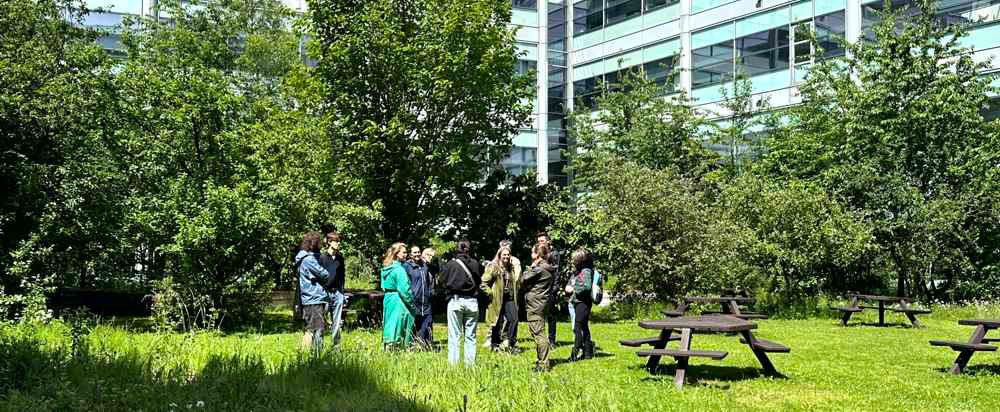
From the Michael Smith Building’s Quad to the Stopford Common Room, this year’s Environmental Sustainability (ES) Showcase celebrated biodiversity and sustainable lifestyles. Hosted by the Faculty of Biology, Medicine and Health (FBMH), the event brought together staff and students from across the University for two afternoons of hands-on workshops, quad tours and tabletop activities.
Day 1: Michael Smith Quad
The showcase kicked off in the Michael Smith Quad Garden with a plant pallet workshop led by Jo Pennock, Director for Social Responsibility in the School of Biological Sciences (SBS). Despite the light drizzle, attendees deconstructed wooden pallets and created rectangular planters. These will be used to plant flowers around the Quad, attracting more pollinators and boosting biodiversity.
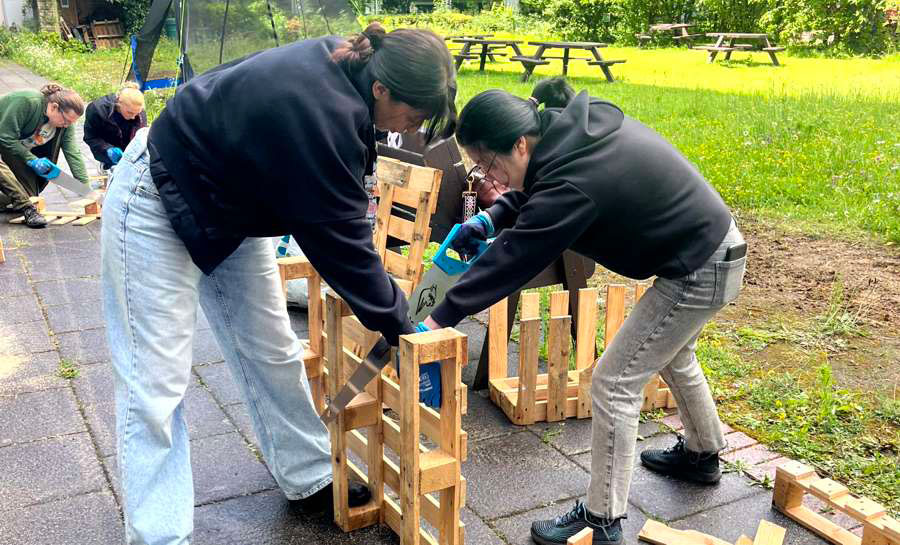
Attendees at the pallet workshop.
Following the workshop, Bred Beckett, Quad Manager and PhD student, led attendees on a tour of the quad. Bred showed attendees the work that has been done to turn the area into a garden that sustains wildlife and acts as a wellbeing space for campus users. Together with Jo Pennock, this duo formed the SBS Quad Guardians, overlooking the maintenance of the Quad to ensure it remains a lively, clean and relaxing green space for all to enjoy.
The tour ended in the central pond area, surrounded by five raised beds that are maintained by gardeners around the University. For a week leading up to the showcase, attendees were invited to vote for their favourite raised bed for a People’s Choice Award. Raised Bed 3 captured the most hearts and won by an overwhelming majority. Some comments include:
“The most balanced of all and it looks lively.”
“Lovely huge Acer tree (that I know the owner of spends a lot of time and effort looking after and pruning), plus fantastic woodland planting including hardy geraniums, ferns, plus then a load of other varied flowers that are great for pollinators.”
“This one supports biodiversity as there are flowers, shrubs, ground cover, leafy perennials and small trees nearby, so it offers nectar, cover, shade and habitat. A good raised bed is not just about growing plants; it also changes how people use the space. This one feels like a mini garden room.”
To thank the gardeners for their hard work, creativity and care, the winning gardener, Emma Keevill, was given a lovely trowel and FoodOnCampus vouchers as a reward. The hope is to continue running similar competitions in the future – not just to serve as a motivation for all the amazing gardeners, but to raise awareness of this beautiful haven in our Faculty.
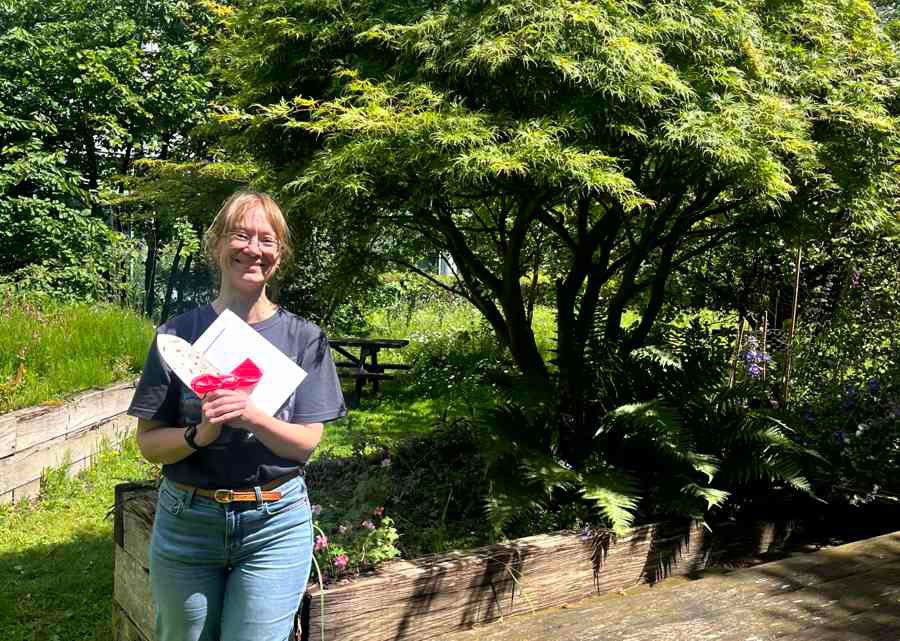
Emma in front of her raised bed in the Michael Smith Quad.
Day 2: Stopford Common Room
The second afternoon of the showcase was hosted by Dr Maggy Fostier, FBMH Associate Dean for Environmental Sustainability, and the School of Medical Sciences (SMS) Belonging Project Wellbeing Team. Held in the Stopford Common Room, the event featured a whole host of exhibitions and stalls that sparked conversations around sustainable living at home. These include:
- Stopford Rear Quad Biodiversity: Undergraduate student Chloe Powell’s final-year project on monitoring biodiversity and implementing ecological interventions in the Stopford Rear Quad.
- SHS Eco Champions: SHS Eco-Champion lead Harriet Bickley engaged attendees with wildlife through several table-top games, including tree-matching and bird identification.
- Sustainable kitchen and bathroom: Students from the Sustainability in Healthcare Conference (Jupiter Mo, Raeesa Mank and Manaswinee Bora) returned with their exhibitions, showcasing simple sustainable swaps in the kitchen and bathroom, such as using toothpaste tablets and eating more plant-based meals.
- AI in healthcare: Also from the Sustainability in Healthcare Conference was a stall on the use of artificial intelligence in healthcare and its implications on the environment and patient experience, presented through a fun card game designed by Emily Barrett.
- Model eco-kitchen: Divisional Operations Managers Debbie Smith and Linsey Nelson introduced eco-friendly kitchen products that the Faculty buildings could use, including a plastic-free kitchen sponge from Tesco.
- Bee Cup: Marketing representative Hannah Blinkhorn joined us to raise awareness of the Bee Cup scheme in the University – new users can still redeem a free drink upon sign-up.
- Hedgehog Action Group: Moe Gavin and Isabel Whyte introduced the Hedgehog Action Group, which colleagues can join to get involved in the conservation of hedgehogs, an iconic British species.
- Firs Botanical Grounds: Horticultural Technician Osian Thierry brought along a terrarium, free plant giveaways, and a presentation on the University’s plans to create a public Botanical Gardens for Manchester.
- Central ES Team: Through a spin-the-wheel game and free sweets, Lucy Millard, Suzie Hardy and ES intern Ray Power encouraged attendees to fill out a commuter survey and complete actions on the No Time to Waste platform.
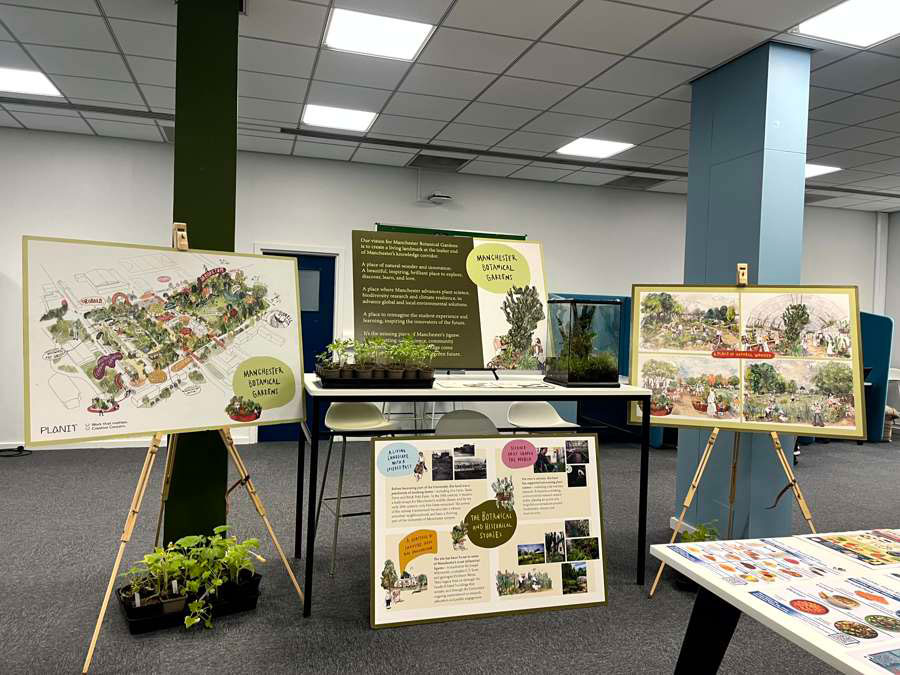
The Firs Botanical Grounds stall in the Stopford Common Room.
Alongside these stalls were two sustainability workshops led by the SMS Belonging Project Wellbeing Team:
- Insect Puddlers: Attendees filled up empty pudding ramekins with compost, sand, pebbles and water to create puddlers – shallow environments that give insects, such as butterflies, a place to cool down in the summer.
- Wildflower seed bombs: Combining compost, sand, flour, water and wildflower seeds in a bowl, attendees brought home seed bombs that can be thrown into their gardens and encourage growth of wildflowers.
With so many new ideas and projects around the Faculty and wider University, there continues to be more to share each year. The showcase provides a great opportunity to acknowledge these efforts and progress made towards our sustainability agenda.
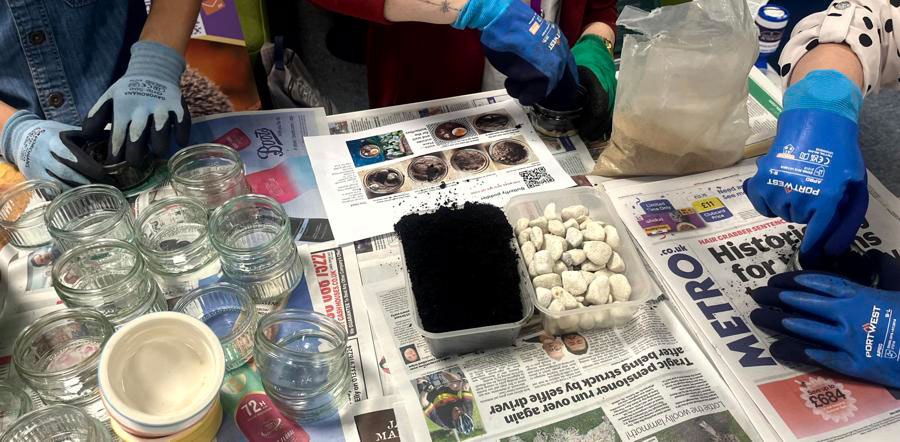
Insect puddler workshop.
Additional information
Our Faculty Quads
- Meet the team behind the Michael Smith Quad
- Supporting urban biodiversity: The Michael Smith Quad
- February 2025 update from the Michael Smith Quad Garden
- 5 Tips for Mindfulness and Wellbeing in the Smith and Stopford Quads
Stalls and activities on 11 June – related articles
- The SHS Environmental Sustainability Champions Network
- Students reimagine the future of healthcare at the Sustainability in Healthcare Conference
- University launches new reusable cup scheme in effort to reduce carbon footprint
- From waste to reuse: How the Bee Bowl is transforming The Market
- Latest News from the Firs Botanical Grounds
- No Time to Waste: Log your sustainable actions < Social Responsibility
- Hedgehog Friendly Action group hosts a winter bakesale and chooses a logo < Social Responsibility
Additional ES resources
- ES at the University
- UoM Sustainability squad sign-up – contact Lucy (lucy.millard@manchester.ac.uk)
- PS code of practice
- Sustainable Futures
To find out more about Environmental Sustainability in FBMH, visit the Faculty’s intranet page, and website, or contact srbmh@manchester.ac.uk.
0 Comments