
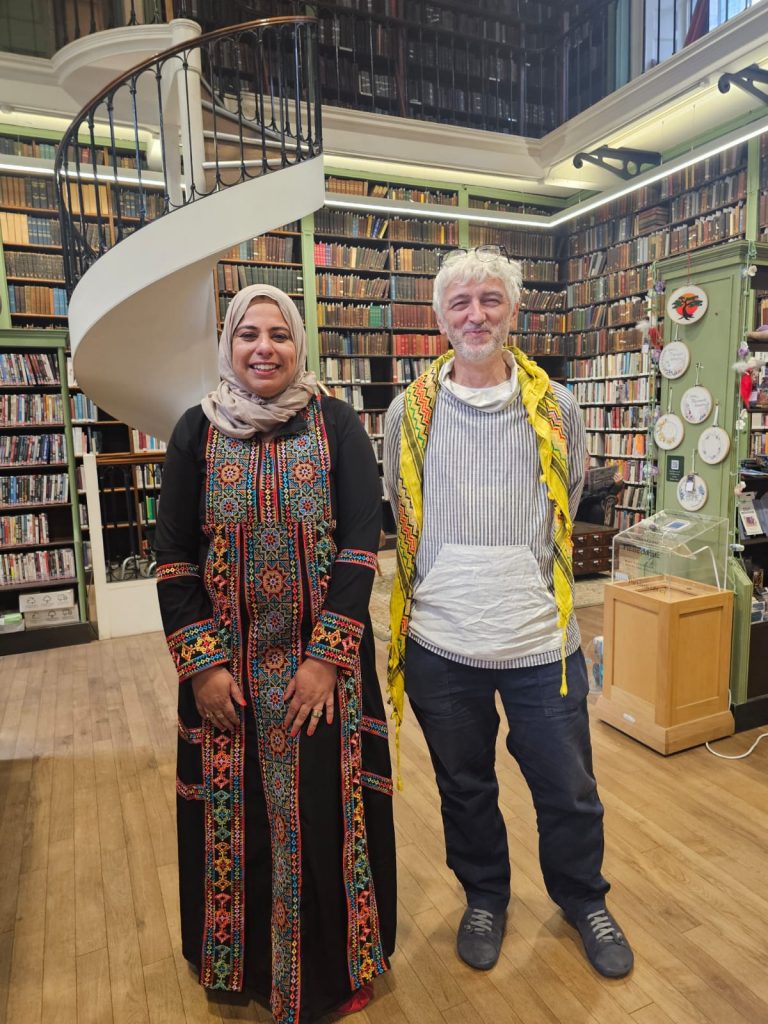
Sadia Habib and Ümit Yildiz (MIE Anti-Racist Education Network): Defining Islamophobia and Tracing the Making and Impact of Normalised Racism
The International Day to Combat Islamophobia marks the Christchurch mosque attacks in 2019 when a white supremacist murdered 51 Muslims and injured many more, reminding us of the rise of global Islamophobia.
For Manchester communities, this day is not abstract, not just something that happened over in New Zealand. This Ramadan two men entered Manchester Central Mosque carrying weapons, apparently intending harm, before they were stopped. In summer 2024, UK mosques were attacked in racist riots. Earlier warnings had already been documented: a Muslim Census and Muslim Engagement and Development (MEND) report shared Home Office data showing under half (45%) of all religious hate crime offences targeted Muslims, a figure largely consistent in recent years.
Calling Islamophobia a type of racism names how it works. Not only hostility towards Muslims, it is about bodies, clothes, accents, skin, names, and spaces like mosques or Islamic schools; about who gets stopped and surveilled, whose prayers are seen as suspicious, whose death is framed as inevitable or understandable. Racism turns ‘Muslims’ into a racialised problem, to be managed, disciplined, or erased from public life.
When we hear resistance to the use of the term ‘Islamophobia’, we see attempts to soften and individualise something systemic. If Islamophobia is reduced to “prejudice”, then we can respond with workshops, polite debates, and calls for ‘tolerance’. If we see it as racism, we then talk about policing, media, foreign policy, borders, counter‑terror frameworks, and the everyday violence of feeling out of place in your own city.
On this international day, we remind ourselves that we have a clear and important definition: Islamophobia is “a type of racism that targets expressions of Muslimness or perceived Muslimness”. If we reduce Islamophobia to ‘anti-Muslim hostility’, we strip away the structures of power that make attacks on mosques possible and predictable.
We must challenge political, media, and everyday discourse that repeatedly frames Muslims and Islamic spaces as threats, problems, or ‘legitimate’ targets. Colleagues researching global media bias consistently provide large content analyses to show most coverage links Muslims/Islam with negative traits (violence, threat, extremism), which correlates with increased hate crimes, including attacks on mosques. Sadia is the co-founder of The Riz Test – a tool developed to measure the representation of Muslims in film and on television which shows the deep-seated presence of Islamophobia in popular culture.
Global political rhetoric with talk of ‘banning’ Muslims, travel bans, “Muslim no-go zones” or depicting Muslims as a security problem turns mosques into imagined sites of danger. Laws, policies, and policing that disproportionately target Muslims, and the failure to condemn or prosecute anti-Muslim hate, signal that Islamophobia is tolerated, emboldening those inclined to attack mosques.
Universities are not immune to these dynamics. Islamophobia manifests in explicit ways: students being questioned, monitored, or treated with suspicion because of their clothing or religious expression. It also operates in more subtle, structural ways, for example through disparities such as pay gaps. Recognising these different forms is essential if universities are serious about working towards becoming Muslim-friendly institutions.
To combat Islamophobia, we need to analyse long histories of empire, Orientalism, and racialisation of Muslims, symbolic maps that connect Christchurch to Manchester, local stories to global patterns. The International Day is a time to renew our commitments and build solidarities: listening to Muslim communities, insisting on accurate definitions, ensuring safety and care both inside and outside the university, and challenging Islamophobia by using existing and new policies and practices that tackle racism itself.


Contact Us
+44 (0) 161 306 6000


0 Comments