
What We Learned from The Making Room Fair
Tetyana Solovey discusses how the repair and remaking of clothing can be fun, useful, and surprisingly easy to learn.
Photos by James Maddox
The Social Life of Repair
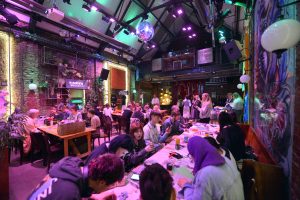
The Making Room Fair, held on 6th November at The Yard in Manchester, was a six-hour event designed to celebrate and teach hands-on techniques for prolonging the life of clothing. As part of the ESRC Festival of Social Science 2025, it brought together local makers, artists, students, and the public to explore upcycling, repair, and creative approaches to sustainable fashion.
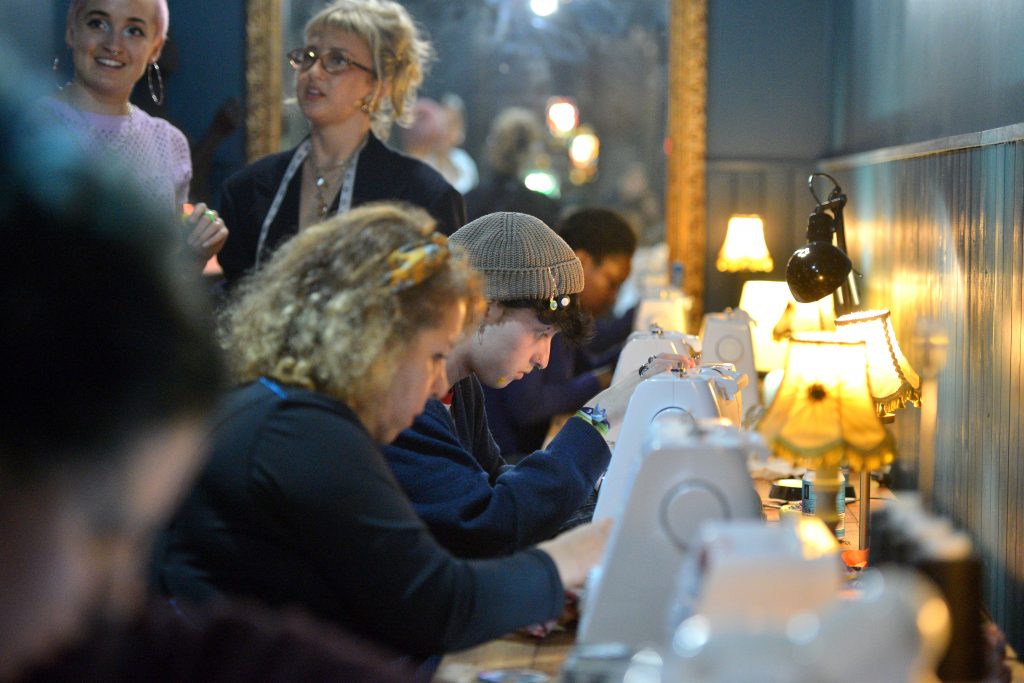
The Fair featured multiple making stations: Manchester Mending Club ran a repair booth; fashion professionals and students volunteered to help with patching and stitching, and sewing machines were available for more advanced alterations and upcycling. Visitors could also customise their clothes with linocut printing facilitated by Krass Community Collective and screen printing, led by Print Parlour, using designs from local artists.
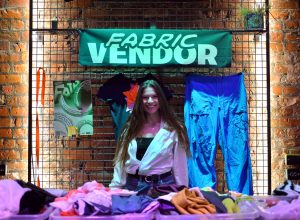
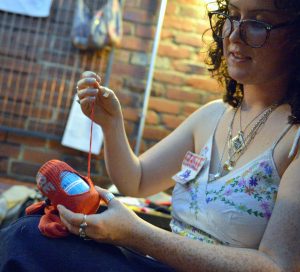
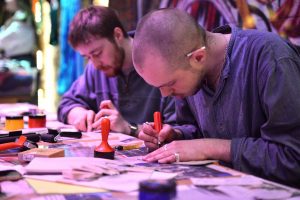
The event sold out all 200 tickets on Eventbrite, and on the day, the venue was filled with participants, many with little or no prior sewing experience, and some eager to learn new skills. There were also allies who’s already running sewing and upcycling workshops who came to connect with like-minded enthusiasts.
The Fair was organised with the aim of introducing making and repair to beginners, encouraging learning for those wanting to develop their skills, and helping participants connect with others. It turned out to be more doable and enjoyable than many anticipated. One of the participants came to fix their Vinted-sourced coat. It took just a few minutes to learn the basics of the sewing machine, ten minutes to repair the pockets, and another fifteen to hand-stitch the lining. Another attendee upcycled a pair of denim shorts that had been lying dormant in the wardrobe. With guidance from professional tailors, additional panels and legs were added, transforming the shorts into a new pair of trousers. The happy maker left wearing their creation.
I spent the evening listening to stories like these, watching as clothes gained incredibly emotional weight by being repaired and transformed by themselves, and witnessing the confidence that came with realising that it could be done again. No one was striving for perfection, but rather having clothes fixed or remade.
Learning through Making
I learned it myself too. During my PhD fieldwork on upcycling post-consumer textiles, I met Jess O’Riley (who runs J.O. Studio, upcycling abandoned festival tents into accessories and clothes) and James Robinson (creator of the slow fashion brand Cold on Sunday). Together with graphic designer Connor Thomas-Davidson, they launched The Making Room project – a “micro-factory” supporting ethical, small-scale clothing production and facilitating community-based making, learning, and sharing of skills through workshops and events like The Making Room Fair.
I attended their first workshop on pillow-making from textile offcuts. The sewing skills I had learned at school and left unused for years came back quickly. Soon after, I bought a used sewing machine and started reworking garments for myself and friends. As much as I love shopping for pre-loved clothes, to keep the metaphor of love – I actually prefer to stay with the “lovers” I’ve already worn. If they don’t fit or are damaged, I can simply remake or repair them. Making has also become part of my research methodology, as the autoethnography of making helps me understand the practice of upcycling from the inside.
Putting Creativity Back in the Hands of Consumers
This is how the idea emerged to include The Making Room Fair, a project developed and managed by The Making Room team, in the UKRI ESRC Festival of Social Science – a nationwide event run by 41 universities and research institutes.
In academic discussions of fashion and sustainability, making practices – from mending to remaking – are seen as ways to foster less resource-intensive relationships with clothing. As Amy Twigger Holroyd beautifully puts it, “By integrating making into fashion we create an alternative, more materially grounded – but less materially intensive – means of meeting our human needs for identity and participation.” (Twigger Holroyd, 2015: 260). Positive change in clothing consumption depends on putting creativity back in the hands of consumers – allowing them to act as co-creators of garments (Collins, 2018; Middleton, 2015; Von Busch, 2015) – and exploring practices of clothing use that go beyond simply buying new. Furthermore, these acts of making also de-alienate labour. Following Marx’s discussion of alienated labour, making helps us reconnect with the human work embedded in garments, much of which happens invisibly in production overseas. The Making Room Fair set out to test these ideas in practice and to show how repair and remaking can truly make a difference.
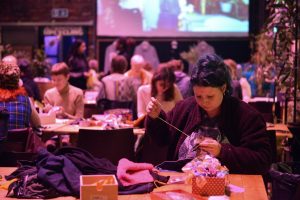 During the mending session, there was exchange between two attendees:
– Have you sewed before?
– A bit, in school!
-Sound!
The short dialogue between attendees of The Making Room Fair about mending clothes revealed that sewing in school was once part of Home Economics in Ireland, Caring for Baby in Australia, Art Classes in the UK, and Craft Classes in Ukraine – not without jokes about how gendered those lessons used to be. Yet, beneath the humour, it revealed how these basic skills – somehow forgotten or even dismissed – are finding their way back into people’s hands and conversations.
Making it Last, Making it Work
The second part of the event featured public talks under the themes “Making it Last” and “Making it Work”, highlighting how joyful and creative reuse can be – whether through trading vintage treasures, upcycling of any kind of materials or fostering local clothes swaps and community repair sessions.
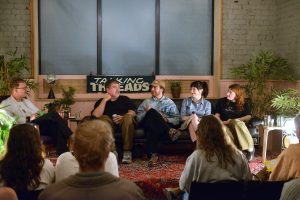
From left to right: James Robinson (founder of Cold on Sunday); Neil Summers (founder of Outdoor Licence brand); Calum Gregory (founder of Gander brand); Elizabeth Mary Morgan (founder and creative director of The Nora Store); Molly Muzsla (creative stylist and producer).
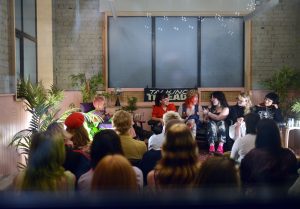
From left to right: Jess O’Riley (founder of J.O. Studio); Niamh Donovan (director of Future Fashion Fair), Erin Taylor-Thomas (founder of thrift store Beg Steal and Borrow), Madeline (co-founder of Doll World brand), Molly and Ilyah (interns at Doll World)
However, many participants noted that commitment to ethical production and advocacy for sustainable consumption comes with challenges – including burnout and financial pressure. Independent designers, stylists, and independent shop owners shared how difficult it can be to sustain freelance or small-scale enterprises while competing with the speed and prices of mass production. In the world of fast fashion, where profit often overrides purpose, the word “cutthroat” came up more than once.
As discussions continued, I noticed some audience members quietly mending their clothes while listening. That simple act captured the spirit of the evening: change often begins with small acts of repair.
The Making Room Fair was part of the ESRC Festival of Social Science 2025 and was made possible thanks to funding from the Economic and Social Research Council (ESRC), which is part of UK Research and Innovation (UKRI). The UKRI Economic and Social Research Council (ESRC) is part of UK Research and Innovation (UKRI), a non-departmental public body funded by a grant-in-aid from the UK government. It funds world-leading research, data and post-graduate training in the economic, behavioural, social and data sciences to understand people and the world around us.
Contact Us
+44 (0) 161 275 0189


0 Comments