
Academic Advising and professional development
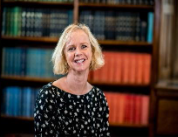 Caroline Hoyle is a Senior Lecturer in Law and the Senior Academic Advisor for the School of Social Sciences. Earlier this year she achieved professional recognition as Recognised Senior Advisor (RSA) by the UK Association of Advising and Tutoring (UKAT). Here she reflects on the journey, the benefits of applying for professional recognition with UKAT, and offers practical advice for others who might be considering it.
What does UKAT do?
UKAT advances the scholarship and practice of academic advising and personal tutoring in Higher Education in the UK. They achieve this through their conferences, workshops, supporting original research, accreditations of practices, professional courses, and resources. As an Institutional Member of UKAT, all staff at the University of Manchester can join as affiliate members free of charge. As an Affiliate Member, you can gain direct access to all the member-only resources, access to the UKAT online Professional Development Curriculum and membership of any Special Interest Groups.
Through the UKAT Professional Recognition Scheme academic advisors submit evidence of their practice against the competencies of the UKAT Professional Framework for Advising and Tutoring and the UKAT Core Values of Personal Tutoring and Academic Advising. The scheme facilitates staff development through a reflective approach to advising, supporting tutors, and enhancing academic support.
What prompted you to apply for professional recognition with UKAT?
As a member of UKAT UoM has five fully-funded places annually on the professional recognition scheme. When a call came round via the University Senior Academic Advisor’s Network I saw this as an opportunity to deepen my understanding of advising theory and pedagogy as well as obtaining external recognition of my leadership in advising. As the process of applying for professional recognition involves compiling reflective statements of practice, it also created space to engage in critical reflection of my own advising practice and how I lead and support other advisors.
What did the process involve and what support was available?
The first step is to identify the relevant level of professional recognition (there are three: Practitioner; Senior and Leader). As a Senior Academic Advisor, the appropriate level for me was Recognised Senior Advisor. The UKAT handbook describes recognition at this level as demonstrating ‘sustained effectiveness in student support through the organisation, leadership, or management of personal tutoring/academic advising.’ The application process requires candidates to compile a portfolio of evidence mapped to the competencies of the UKAT professional framework, along with reflective statements supported by references to scholarship, and action points for further professional development. For Recognised Senior Advisor applicants also provide a reflective account about their leadership of advising. Applicants can join the scheme at any time and have 12 months to compile and submit the portfolio.
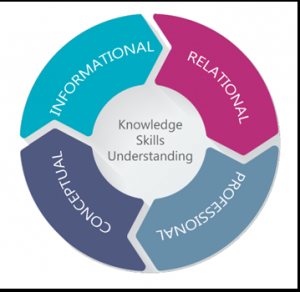
Fig 1. The four broad categories of the UKAT Professional Framework for Advising and Tutoring
How did the process of seeking professional recognition impact on your advising practice?
The process of seeking accreditation encouraged me to delve more deeply into the literature related to academic advising theory. As an experienced academic advisor my own practice had become somewhat intuitive. Through deeper engagement with scholarship, I gained further insight into potential reasons for student behaviour and lack of engagement with advising. For example, I have a greater awareness of cultural barriers that mean students may be reluctant to actively reach out to advisors, and the need for advisors to be proactive and visible.
Engagement with UKAT has introduced me to a community of practice with a shared interest in advising. For example, UKAT’s Special Interest Groups (SIGS) provide members with an opportunity to join others with similar interests in advising and tutoring. Being part of a wider community of practice has provided an opportunity to develop my own scholarship around advising and to share ideas and good practice with Senior Tutors at other universities.
What practical advice do you have for others thinking about professional recognition.
- Go for it! Lots of the evidence you need to support the competencies you will have already, so get started by mapping the existing evidence you have to the competencies.
- Use the UKAT professional framework action planning tool to identify further evidence you need to obtain to evidence each of the competencies.
- Create folders for each of the competencies and start to compile and save evidence.
- Sign up for the UKAT Recognition Retreats for guidance and mentoring support. Each writing retreat is based on one of the five areas of competency and guidance is provided from members of the UKAT team on the evidence you can use. Time is also set aside for candidates to work on their portfolio and receive mentoring support.
- Take advantage of the mentoring support available from members of the UKAT team. Book an online mentoring session and get early feedback.
- Reach out to others in UoM who have completed the scheme – we are growing in number and happy to provide mentoring support for others.
Additional useful resources:
Drake, J., Jordan, P., and Miller, M., (eds.) (2013). Academic Advising Approaches: Strategies That Teach Students to Make the Most of College. 1st edn. San Francisco: Jossey-Bass. (available online)
Lochtie, D., McIntosh E., Stork A., and Walker B., (2018). Effective Personal Tutoring in Higher Education. 1st edn. Routledge. (available online)

TEA is a place where we can share practice and experience around teaching and learning with colleagues, students and the wider public – how we Teach, Explore, Apply
We’d really like to hear your responses to the stories we feature – if you want to respond, please email the ITL team at teaching.learning@manchester.ac.uk, or the University’s Teaching and Learning Online Network (TALON) on Yammer is a great place for you to carry on the discussion of any practice you find really interesting.


Contact Us
+44 (0) 161 306 6000


0 Comments