
Reflection Matters – A reflective blog on Disability Workshops
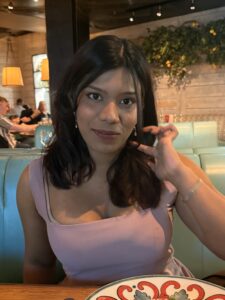
Alayna is a final year student of BA Drama and English Literature. She serves as a Student Partner on the Representation Matters project, facilitating workshops, writing and assisting in the working of the project. Graduating in July, she aims to pursue a career in people-centric work including education, social care and human development.
Facilitating the Representation Matters workshops revealed the merit and necessity of creating time, trust, and space for both students and staff at universities to speak openly about their experiences. What began as conversations about assessments and accessibility quickly unfolded into broader reflections on exclusion, communication, and the emotional realities of navigating higher education for both students and staff.
From the outset, the methodology of the workshops was intentional to ensure openness and support for the participants. Student discussions were facilitated by student assistants, while staff groups were guided by staff facilitators. This peer-led structure created an atmosphere that felt noticeably open and collaborative. As facilitators, we were not positioned above the discussion, but within it. Participants spoke candidly about frustration, exhaustion, uncertainty, and even hope and appreciation. This openness was perhaps possible as participants were not simply being asked for “feedback” but rather, were invited into a shared reflective process.
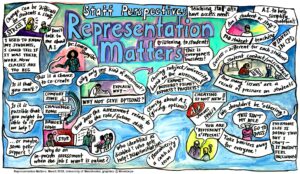
Infographic on staff perspectives of assessment issues for the Representation Matters project
In order to maintain the richness of these conversations in our data, verbal summaries as well as visual images served as the output from these workshops. In the context of our workshops, artwork not only serves as a method of recording, but also an interpretive, synthesising tool. The artists at the workshops worked hand in hand with us, intently listening to all discussions, engaging and chiming in on certain conversations. It was important for us to make sure nobody in the room was outside or above the process, everyone from the students, staff, artists and research associates were entrenched in the process.
What struck me from these conversations was not only the contrast between staff and student perspectives but also the parallels. Students spoke about assessments as spaces that often feel exclusionary rather than supportive. A recurring theme was disconnect; disconnect between students and staff, between staff and DASS, and even between students and the support systems designed to help them. Students described struggling to know where to go, who to contact, or how to access accommodations. Beneath many of these discussions was the shared sentiment that “one size does not fit all.” Students wanted flexibility, but more importantly, they wanted to be listened to as individuals rather than filtered through rigid administrative processes.
At the same time, staff perspectives revealed their own frustrations and limitations. Many staff members expressed genuine care for students but also described feeling constrained by institutional systems, large class sizes, and evolving concerns around academic integrity and AI. There was a noticeable tension between wanting to create inclusive assessments and feeling unsure how to do so fairly or sustainably. What stood out to me most was that staff also described feeling disconnected from systems like DASS, often struggling to navigate processes themselves. In many ways, both groups seemed to be grappling with the same structural barriers from different positions.
In the second workshop we shifted the focus of conversation solutions. Discussions focused on clarity, communication, and accessibility such as, clearer assessment briefs, centralised support systems, timely information, and more flexible approaches to assessment. Students call for timely information, consistent structures, and clear points of contact, practical changes that could significantly reduce stress. Both staff and students came up with several ideas for alternatives to traditional assessments and also acknowledged the potential challenges of their ideas. We discussed possible issues that may arise in the implementation of our ideas as too many options can be helpful but also cause students to be overwhelmed, group work can be both beneficial and detrimental, and well-intentioned changes can have unintended consequences. Students and staff both showed nuance in their consideration of each other’s’ perspectives which is reflected in the many tensions highlighted in the illustrations.
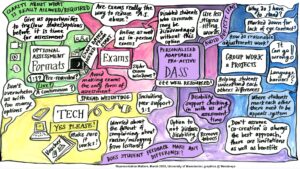
Infographic on ‘solutions’ for inclusive assessments for the Representation Matters project
Taken together, these insights point toward the need for systemic improvement rather than piecemeal change. Themes like communication, flexibility, and stigma are deeply interconnected and addressing one in isolation is unlikely to be effective. There is an opportunity here to map these relationships more explicitly and identify where institutional shifts could have the greatest impact. At the same time, the workshops themselves offered a glimpse of what a more inclusive university culture could look like. Simply creating a space where people felt listened to demonstrates that inclusive, participatory approaches does more than generate richer data, it fosters a sense of agency and collaboration. In many ways, the workshops model the kind of collaborative, responsive culture that participants are calling for. The method is not separate from the message but rather, is part of it.
TEA is a place where we can share practice and experience around teaching and learning with colleagues, students and the wider public – how we Teach, Explore, Apply
We’d really like to hear your responses to the stories we feature – if you want to respond, please email the ITL team at teaching.learning@manchester.ac.uk, or the University’s Teaching and Learning Online Network (TALON) on Yammer is a great place for you to carry on the discussion of any practice you find really interesting.
Contact Us
+44 (0) 161 306 6000


0 Comments