
The personal is pedagogical! Academic transformation through connection.
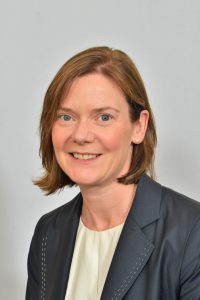 In 2026 Claire Mallon (SFHEA), Programme Director and Lead for Clinical Teaching on the BSc Optometry (School of Health Sciences), won the national award from UKAT (UK Advising and Tutoring) for her work to deliver Outstanding Student Support. In this piece we uncover the principles behind her approach and learn more about how she and her colleagues delivered a truly transformational learning experience for optometry undergraduates, which was also recognised with the Distinguished Achievement Award (Teacher of the Year: Faculty of Biology, Medicine and Health).
Introduction
Claire was the Lead for Clinical Teaching and assumed the role of Programme Director for what was then the BSc Optometry back in May 2024, just as a constellation of factors came to a head for a particular cohort of students. Claire’s proactive and student-focused leadership turned a complex situation into triumph, transforming students’ outcomes and, in consequence, their futures. The approach was based on four C’s – Communication, Content, Connection and Confidence. Having interviewed Claire, I would add a fifth C – Care. The attention to detail and sensitivity to the student experience demonstrated through this intervention are indeed ‘outstanding’.
A complex constellation of factors
In 2022/23, at the end of their second year, an unusually large number of students – 20% of the cohort – found themselves needing to Resit Without Attendance (RWA) in 2023/24. This situation was the result of an unusually complex set of circumstances. Post-Covid 19, the cohort had entered university based on teacher-assessed grades from school, progressed through block-teaching assessed by open-book assessment at the end of Year 1, and were then faced with the more challenging demands of Year 2 content alongside a return to closed-book, on-campus examinations.
Students should not feel forgotten
In order to have a chance of success, these students needed a structured intervention to rebuild skills, confidence and sense of belonging before they returned from ‘resitting without attendance’ to regular study in 2024/25.
The principle was simple: students should not feel forgotten. Claire contacted the students periodically between January and August 2024, initially as Clinical Teaching Lead and then as Programme Director, to plan their successful return and devise the form, content and timing of the August intervention. Communication was purposeful rather than constant: explaining what would happen, asking what students needed, preparing them to return and following up when someone disengaged.
The intervention consisted of:
- Proactive Academic Advising support.
- Revision materials were placed in the programme Community Space on Blackboard so everyone had access to targeted revision materials in addition to the units they would be resitting.
- Two-weeks intensive campus-based activity pre-entry (August 2024)
A coordinated system of Advising and support
During the RWA year (2023/24), students retained access to their existing Academic Advisors.
Then when these students started Year 3 (2024/25), Claire became Academic Advisor to all of them. That meant she had more than the normal allocation of c. 12 advisees, but it enabled continuity of care amongst this cohort from someone who really understood the support available, their patterns of engagement, and the clinical context.
As Claire explained, “Optometry students are a diverse group. We have some students with family members who are optometrists, but we also have students who are the first in their family to go to university. Quite a few of our students are commuter students as well, and are maybe working in practice at weekends, or they’ve got another part-time job. Some students have family responsibilities – taking parents or grandparents to hospital appointments because they’re the only person in the family who can drive. It’s information like this that you don’t necessarily know about your students unless you’re their Academic Advisor.”
Claire combined one-to-one advising with group meetings, which helped students recognise peers who had shared the same experience.
Student Support and Wellbeing colleagues were involved when a student did not respond and a welfare check was needed. It was not about one person doing everything; it was about coordinating the right expertise while preserving a clear, consistent relationship with students.
Student-centred design
In terms of the structured reintegration, Claire sought input from two sets of students:
- We asked the RWA students “What do you want us to do? What do you think you might struggle with?”. They fed back via email and at an online meeting we held with them in July over Zoom.
- We also spoke face-to-face with Student Representatives from Years 2 and 3 who had already successfully progressed, “What’s most beneficial to help with the start of Year 3?”
Claire notes, “What surprised me was their emphasis on foundational rather than advanced skills, including more practice in Volk examination (a key optometric process that lets you view the back of the eye using a type of high-powered lens). After such a long gap in clinical skills practice, they recognised that they needed to “walk before they could run”.”
That insight shaped an intensive taught week, followed by a self-directed consolidation week with full access to clinical equipment and a structure informed by feedback from the clinical supervisors. Students reviewed the proposed timetable and suggested additions.
Fostering connection
Student engagement with the intervention stemmed from relevance, responsiveness and continuity.
The students were highly motivated, willing to learn, and receptive to feedback; in fact, several students later fed back that the Bootcamp was the most enjoyable part of university for them.
Visiting clinical tutors supervised the students during the Bootcamp, which meant these students had an early introduction to the people who would become Clinical Supervisors for the whole Year 3 cohort. The students thus got an early start on learning the tutors’ feedback styles and so found the start of full clinical teaching less daunting.
Connection also resided in practical details:
- When organising clinic allocations, the team made sure to place at least two former RWA students in each group, so everyone began clinical practice with at least one familiar face;
- “We also took pains to source the same Year 3 scrub colour as the other students, so they were not visibly marked out from classmates. One colleague later said they had not realised who all the returning students were.” That was a success: they had reintegrated without stigma. Their wider cohort was welcoming, and that peer culture helped draw them fully into the year.
Transforming outcomes
The results were exceptional.
Students said the support and encouragement made a huge difference, that the Bootcamp helped them feel ready, and that meeting future supervisors beforehand reduced anxiety.
- Five students who were initially on track for a 3rd improved to a 2:2—this is the minimum needed to progress to “pre-registration” and thus meant the difference between achieving their goal of entering the optometry profession.
- Of the remaining fifteen, ten students achieved a 2:1 instead of the predicted 2:2.
- Two of these students received the Optometry Academic Progression Award after raising their mark by 24% for Year 3 in comparison to Year 2 – the programme’s biggest recorded improvement.
In summary, the impact on them means they can progress to their pre-registration year and embark on the career they’ve invested so much in.
On reflection, the most important of the 4Cs – Communication, Content, Connection and Confidence – was connection: showing students that they mattered as individuals, avoiding assumptions about why they had struggled, and making sure somebody was genuinely in their corner. “I was a student here in the early 1990’s, and my Academic Advisor used to put a handwritten note in my results envelope each year. He is still around on campus and we still talk from time to time when we bump into each other. The students deserve the credit: they did the work. Our role was to create the conditions in which they could return, reconnect and succeed“.
Resources and further information
- UKAT Awards page
- Distinguished Achievement Award (Teacher of the Year: Faculty of Biology, Medicine and Health)
- UKAT training resources – free to UoM staff
Contact Us
+44 (0) 161 306 6000


0 Comments